
Using VMT to Promote Sustainability
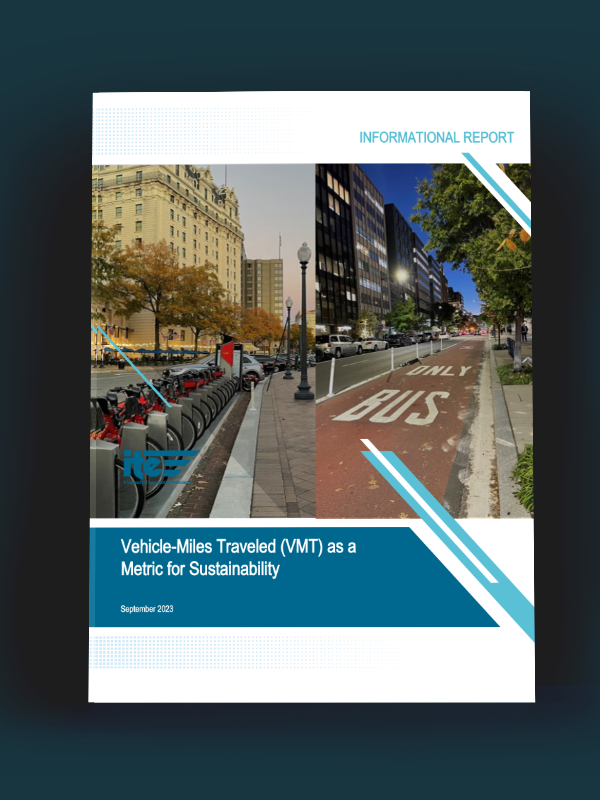
Using VMT to Promote Sustainability
As planning strategies evolve from vehicle-centric to a multimodal, accessibility-focused approach, the focus is on moving people efficiently over vehicles. The new paradigm emphasizes sustainable transportation modes and underscores the significance of Vehicle Miles Traveled (VMT) as a crucial metric. VMT reduction benefits traffic flow, infrastructure costs, community well-being, pollution reduction, non-driver accessibility, and public health.
We’re excited to introduce ITE’s new technical brief, Vehicle-Miles Traveled (VMT) as a Metric for Sustainability. This resource, which includes contributions from our nationwide VMT expert Ron Milam, covers the shift from vehicle-based planning to accessibility-based planning, providing insights and case studies for transportation agencies and practitioners striving to enhance equity, safety, environmental sustainability, and community livability.
share this article
Explore More
Cincinnati Curb Study
In Cincinnati, as in many cities, curb space is a scarce resource. With multiple modes of transportation vying for access to the curb — from personal vehicles, buses, commercial vehicles and rideshare vehicles, to bicycles and pedestrians — Cincinnati has joined the ranks of cities around the world that are looking for ways to make curb space safer and more efficient.
Tools Assessment Technical Memorandum
We identified three travel forecasting models and 11 sketch planning tools that produce VMT forecasts or test VMT reduction strategies.

Pedestrian Crossings
Learn how the evolution of crossing treatments, guidance, and travel behavior is critical to addressing quality of life challenges and meeting expectations for those who walk.