
Using VMT to Promote Sustainability
Using VMT to Promote Sustainability
As planning strategies evolve from vehicle-centric to a multimodal, accessibility-focused approach, the focus is on moving people efficiently over vehicles. The new paradigm emphasizes sustainable transportation modes and underscores the significance of Vehicle Miles Traveled (VMT) as a crucial metric. VMT reduction benefits traffic flow, infrastructure costs, community well-being, pollution reduction, non-driver accessibility, and public health.
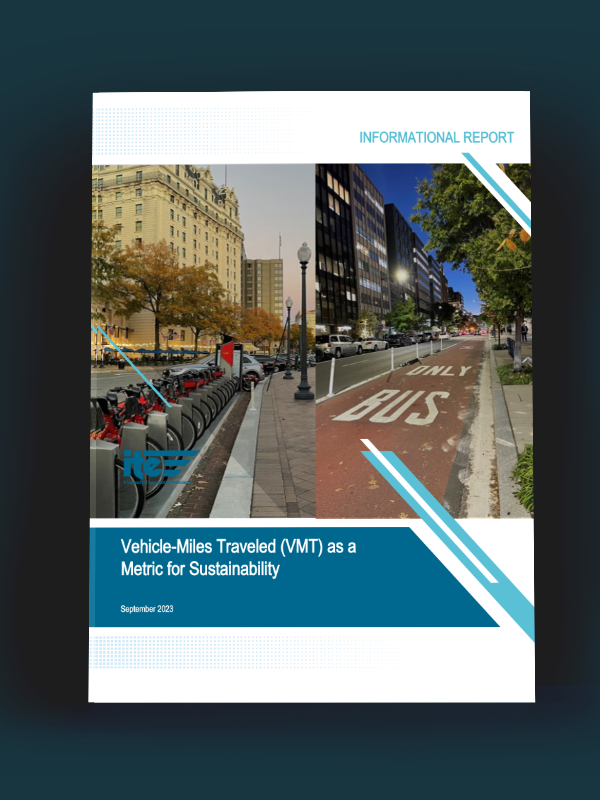
We’re excited to introduce ITE’s new technical brief, Vehicle-Miles Traveled (VMT) as a Metric for Sustainability. This resource, which includes contributions from our nationwide VMT expert Ron Milam, covers the shift from vehicle-based planning to accessibility-based planning, providing insights and case studies for transportation agencies and practitioners striving to enhance equity, safety, environmental sustainability, and community livability.
share this article
Explore More

Navigating Long-Term Transit: Planning in an Uncertain Time
We’re partnering with the Whatcom Transportation Authority in Bellingham, Washington to plan the long-term future and develop a strategy for restarting transit service, welcoming back riders, and ensuring riders can safely get where they would like to go. See what’s in the works.

A Transformative Data Collection Solution: Responding with Our Research
We’ve completed an independent, third-party validation review of StreetLight Data’s intersection turning movement volume estimates. See what we found!
VMT Mitigation Through Fees, Banks, and Exchanges
On September 27, 2013, Governor Jerry Brown signed SB 743 into law and started a process intended to fundamentally change transportation impact analysis as part of CEQA compliance. These changes include elimination of auto delay, level of service (LOS), and other similar measures of vehicular capacity or traffic congestion as a basis for determining significant impacts. Instead, transportation impacts will be determined based on changes to vehicle miles of travel (VMT).