
Using VMT to Promote Sustainability
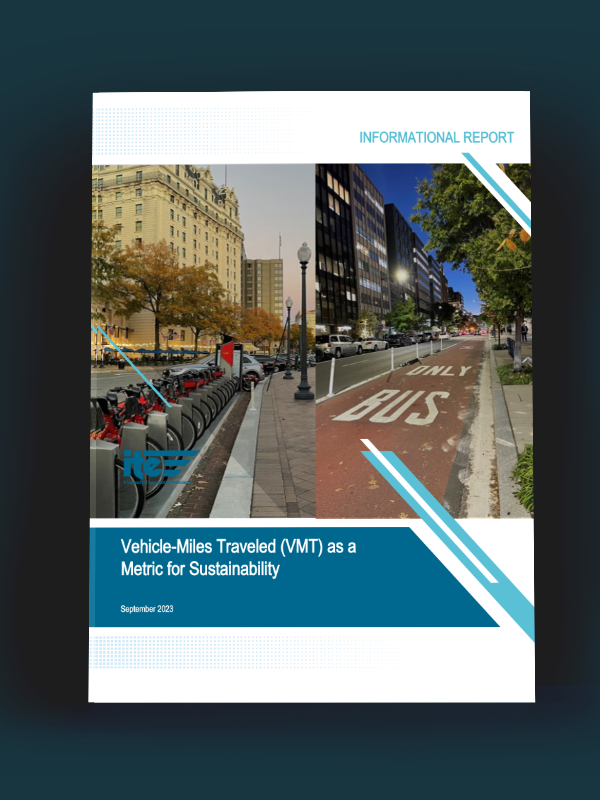
Using VMT to Promote Sustainability
As planning strategies evolve from vehicle-centric to a multimodal, accessibility-focused approach, the focus is on moving people efficiently over vehicles. The new paradigm emphasizes sustainable transportation modes and underscores the significance of Vehicle Miles Traveled (VMT) as a crucial metric. VMT reduction benefits traffic flow, infrastructure costs, community well-being, pollution reduction, non-driver accessibility, and public health.
We’re excited to introduce ITE’s new technical brief, Vehicle-Miles Traveled (VMT) as a Metric for Sustainability. This resource, which includes contributions from our nationwide VMT expert Ron Milam, covers the shift from vehicle-based planning to accessibility-based planning, providing insights and case studies for transportation agencies and practitioners striving to enhance equity, safety, environmental sustainability, and community livability.
share this article
Explore More
Infrastructure Projects & Greenhouse Gas Emissions
Can freeway infrastructure projects have a greenhouse gas emission benefit by improving travel speeds and reducing tailpipe emissions? Explore the corridor level results of three project case studies using different modeling approaches.

Disruptions in Transportation & Their Unequal Impacts
Increasing numbers of phenomena have disrupted our transportation system recently, and many of them have resulted in inequitable impacts on communities. We explored these dynamics in the realm of transportation equity.

Newly Promoted Firm Principals
Defined by our culture of empowerment and investment in the development of every employee, we are dedicated to career growth, even in uncertain economic times. While we are all navigating challenging circumstances, our firm recognizes that the achievements, dedication, and leadership of our valued team members never diminish. We’re pleased to congratulate our four newly promoted firm Principals.