
Using VMT to Promote Sustainability
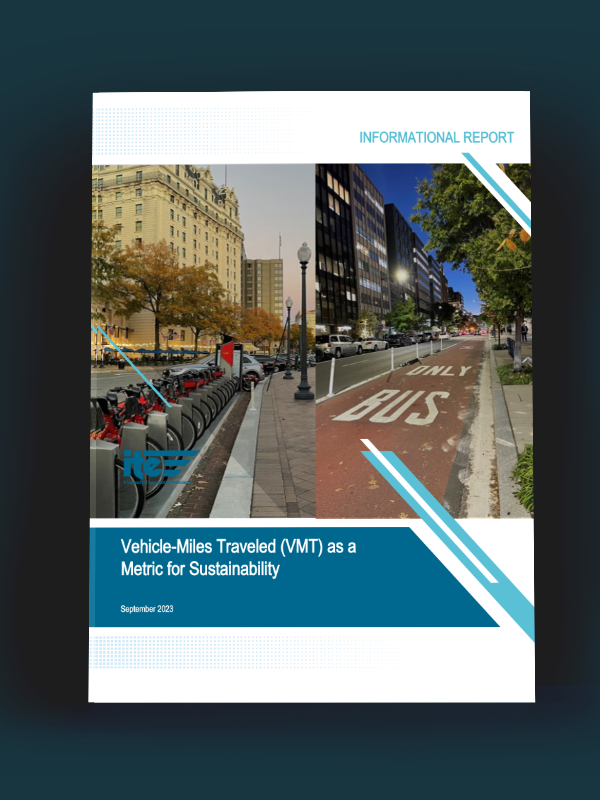
Using VMT to Promote Sustainability
As planning strategies evolve from vehicle-centric to a multimodal, accessibility-focused approach, the focus is on moving people efficiently over vehicles. The new paradigm emphasizes sustainable transportation modes and underscores the significance of Vehicle Miles Traveled (VMT) as a crucial metric. VMT reduction benefits traffic flow, infrastructure costs, community well-being, pollution reduction, non-driver accessibility, and public health.
We’re excited to introduce ITE’s new technical brief, Vehicle-Miles Traveled (VMT) as a Metric for Sustainability. This resource, which includes contributions from our nationwide VMT expert Ron Milam, covers the shift from vehicle-based planning to accessibility-based planning, providing insights and case studies for transportation agencies and practitioners striving to enhance equity, safety, environmental sustainability, and community livability.
share this article
Explore More
Readiness Planning for Autonomous & Connected Vehicles
Traditional automakers and technology companies continue to test and roll out vehicles that are increasingly capable of “driving themselves” without the aid of a human operator.

A New Narrative for Decision Makers, Seat Utilization: Part 3 of 3
Considering evolving transportation metrics and expanding the range of solutions that can effectively reduce congestion, VMT, and emissions.
Core Elements for Vision Zero Communities
Vision Zero emphasizes a Safe Systems approach, which acknowledges that people make mistakes, and focuses on influencing system-wide practices, policies, and designs to lessen the severity of crashes.