
Using VMT to Promote Sustainability
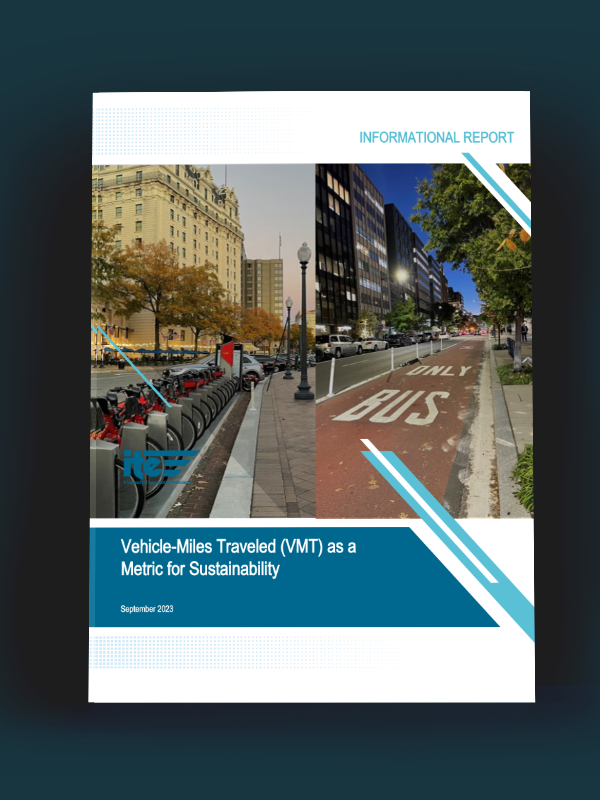
Using VMT to Promote Sustainability
As planning strategies evolve from vehicle-centric to a multimodal, accessibility-focused approach, the focus is on moving people efficiently over vehicles. The new paradigm emphasizes sustainable transportation modes and underscores the significance of Vehicle Miles Traveled (VMT) as a crucial metric. VMT reduction benefits traffic flow, infrastructure costs, community well-being, pollution reduction, non-driver accessibility, and public health.
We’re excited to introduce ITE’s new technical brief, Vehicle-Miles Traveled (VMT) as a Metric for Sustainability. This resource, which includes contributions from our nationwide VMT expert Ron Milam, covers the shift from vehicle-based planning to accessibility-based planning, providing insights and case studies for transportation agencies and practitioners striving to enhance equity, safety, environmental sustainability, and community livability.
share this article
Explore More
SB 743 Agency Decision Matrix
This guide helps California agencies make informed decisions on how to measure and assess Vehicle Miles Traveled (VMT) for land use and transportation projects, ensuring compliance with SB 743.
Still Getting Trip Generation Right: Revalidating MXD+
State-of-the-practice analytical methods should be employed when estimating the trip generation of mixed-use projects. In the latest issue of the American Planning Association’s PAS Memo, John Gard and Corwin Bell of Fehr & Peers describe the advantages, analysis techniques, and use of MXD+ through actual site case studies.

Evolving Visual Communications in a Dynamic World
Partnering with our client, we took on new visual communications strategies through the lens of equitable engagement to elevate participation and build energy around safety improvements.