
Using VMT to Promote Sustainability
Using VMT to Promote Sustainability
As planning strategies evolve from vehicle-centric to a multimodal, accessibility-focused approach, the focus is on moving people efficiently over vehicles. The new paradigm emphasizes sustainable transportation modes and underscores the significance of Vehicle Miles Traveled (VMT) as a crucial metric. VMT reduction benefits traffic flow, infrastructure costs, community well-being, pollution reduction, non-driver accessibility, and public health.
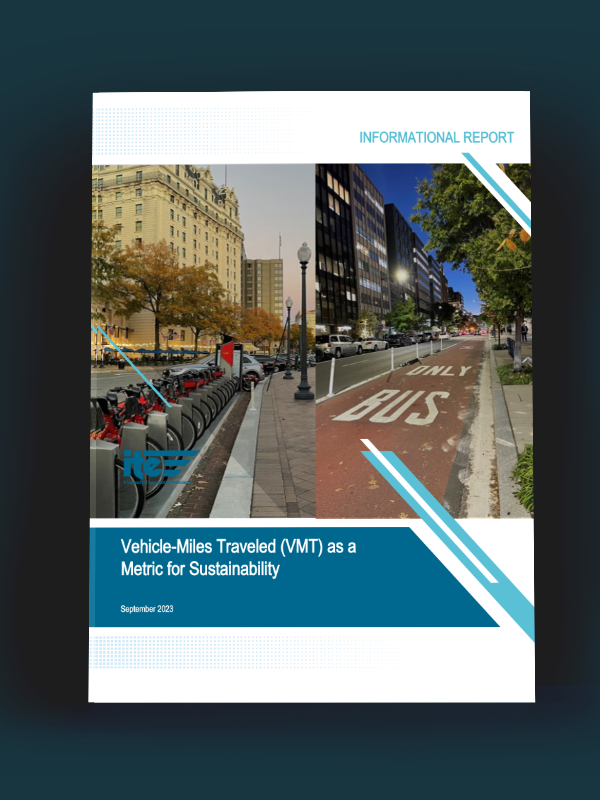
We’re excited to introduce ITE’s new technical brief, Vehicle-Miles Traveled (VMT) as a Metric for Sustainability. This resource, which includes contributions from our nationwide VMT expert Ron Milam, covers the shift from vehicle-based planning to accessibility-based planning, providing insights and case studies for transportation agencies and practitioners striving to enhance equity, safety, environmental sustainability, and community livability.
share this article
Explore More

Travel Access as a Key to Equitable Planning
Analyzing travel accessibility measures how well current transportation networks connect us to destinations and exposes potential modal or equity limitations that may be causing difficulties for some users or geographic areas. Learn more and explore our travel access video.
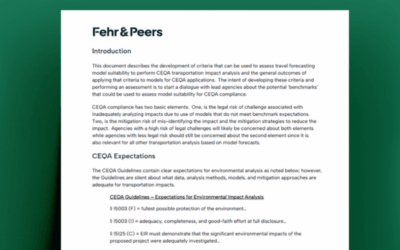
Model Assessment Criteria for CEQA
Agencies should evaluate their models to ensure they provide reliable forecasts and meet CEQA standards for environmental impact analyses.
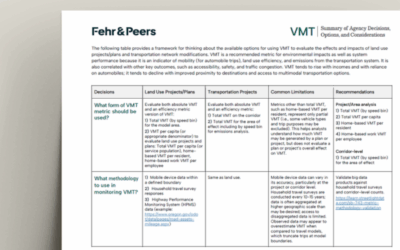
VMT Agency Decision Matrix
This guide helps agencies choose the right methods and tools to measure Vehicle Miles Traveled (VMT) for land use and transportation projects, supporting compliance with California’s SB 743.