
Using VMT to Promote Sustainability
Using VMT to Promote Sustainability
As planning strategies evolve from vehicle-centric to a multimodal, accessibility-focused approach, the focus is on moving people efficiently over vehicles. The new paradigm emphasizes sustainable transportation modes and underscores the significance of Vehicle Miles Traveled (VMT) as a crucial metric. VMT reduction benefits traffic flow, infrastructure costs, community well-being, pollution reduction, non-driver accessibility, and public health.
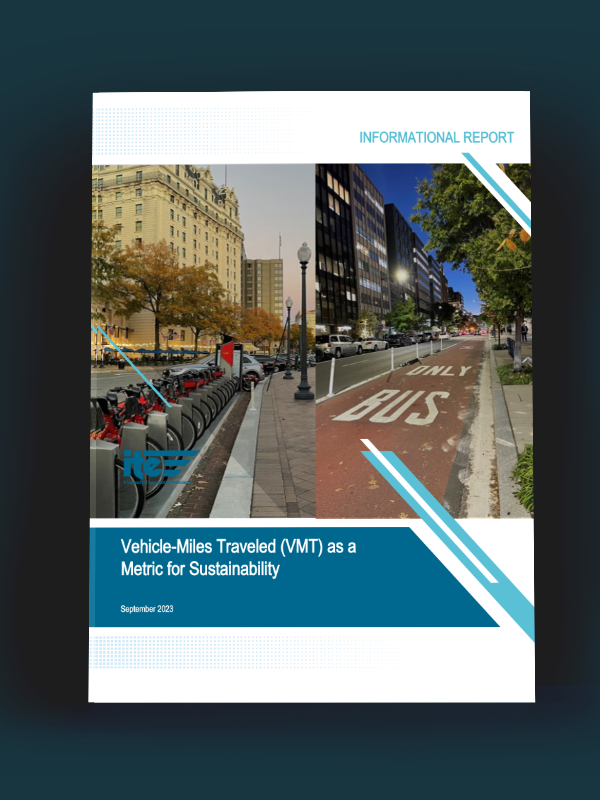
We’re excited to introduce ITE’s new technical brief, Vehicle-Miles Traveled (VMT) as a Metric for Sustainability. This resource, which includes contributions from our nationwide VMT expert Ron Milam, covers the shift from vehicle-based planning to accessibility-based planning, providing insights and case studies for transportation agencies and practitioners striving to enhance equity, safety, environmental sustainability, and community livability.
share this article
Explore More
SB 743 White Paper
SB 743 requires evaluating transportation impacts using VMT instead of Level of Service (LOS).

New Office in the Central Valley
Fehr & Peers proudly announces the opening of our Central Valley satellite office! Located in the heart of downtown Stockton, this office will help us continue to provide for and deepen our relationships with current Central Valley clients while further expanding our ability to serve the region.

VMT & GHG Reduction Strategies
Strategies like transit-oriented development, increasing residential density, and improving street connectivity can significantly reduce VMT and GHG emissions, with some measures achieving reductions of up to 31%.