
Using VMT to Promote Sustainability
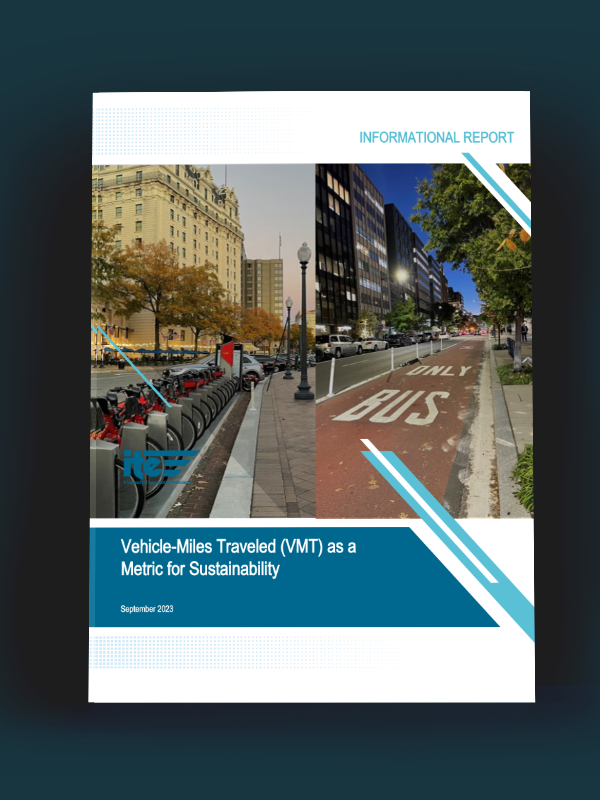
Using VMT to Promote Sustainability
As planning strategies evolve from vehicle-centric to a multimodal, accessibility-focused approach, the focus is on moving people efficiently over vehicles. The new paradigm emphasizes sustainable transportation modes and underscores the significance of Vehicle Miles Traveled (VMT) as a crucial metric. VMT reduction benefits traffic flow, infrastructure costs, community well-being, pollution reduction, non-driver accessibility, and public health.
We’re excited to introduce ITE’s new technical brief, Vehicle-Miles Traveled (VMT) as a Metric for Sustainability. This resource, which includes contributions from our nationwide VMT expert Ron Milam, covers the shift from vehicle-based planning to accessibility-based planning, providing insights and case studies for transportation agencies and practitioners striving to enhance equity, safety, environmental sustainability, and community livability.
share this article
Explore More

Investing in Relationships
Investing in and empowering one another is at the core of our mission. Check out reflections from some of our recent mentoring program participants to see how their careers and relationships were impacted.
The Safe System Approach in Local Road Safety Plans
We invite you to explore the new ITE technical brief that provides insights on integrating the Safe System Approach into Local Road Safety Plans while meeting grant requirements and working towards achieving Vision Zero.

Evacuation Planning & Resilience
Discover how our innovative planning tools can help you prepare for the unexpected and increase your resilience in the event of emergencies.