
Using VMT to Promote Sustainability
Using VMT to Promote Sustainability
As planning strategies evolve from vehicle-centric to a multimodal, accessibility-focused approach, the focus is on moving people efficiently over vehicles. The new paradigm emphasizes sustainable transportation modes and underscores the significance of Vehicle Miles Traveled (VMT) as a crucial metric. VMT reduction benefits traffic flow, infrastructure costs, community well-being, pollution reduction, non-driver accessibility, and public health.
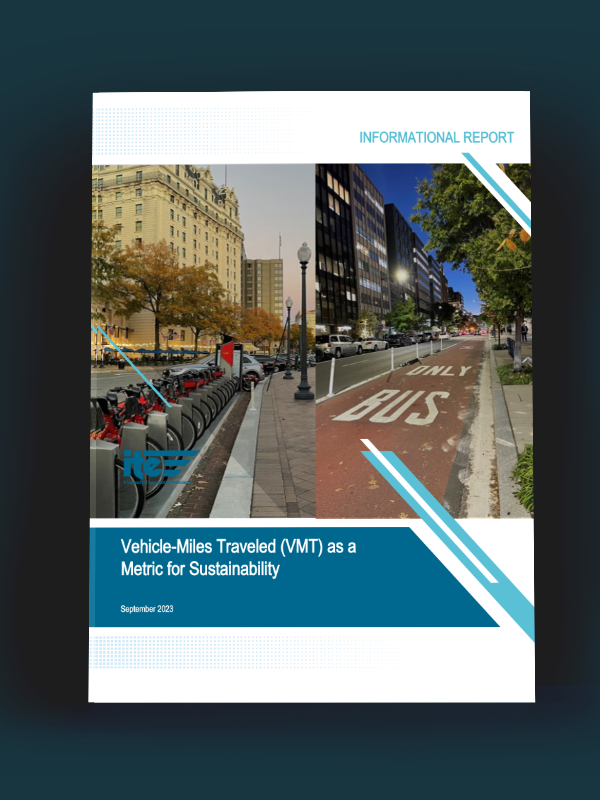
We’re excited to introduce ITE’s new technical brief, Vehicle-Miles Traveled (VMT) as a Metric for Sustainability. This resource, which includes contributions from our nationwide VMT expert Ron Milam, covers the shift from vehicle-based planning to accessibility-based planning, providing insights and case studies for transportation agencies and practitioners striving to enhance equity, safety, environmental sustainability, and community livability.
share this article
Explore More

Prioritizing Safety to Protect Our Most Vulnerable
Discover how Arlington County is actively working towards a fair and inclusive transportation network, taking concrete measures to address the unequal impact of traffic crashes on vulnerable communities.

Collaborating for Safer Solutions
Discover the power of collaboration as we engaged with data partners to serve a new market and support the City of El Paso in enhancing roadway safety.
The Impact of Vehicle Electrification on Safety
What impact will the push for more electric vehicles have on road safety? Explore the potential clashes and opportunities in our latest blog.