
Using VMT to Promote Sustainability
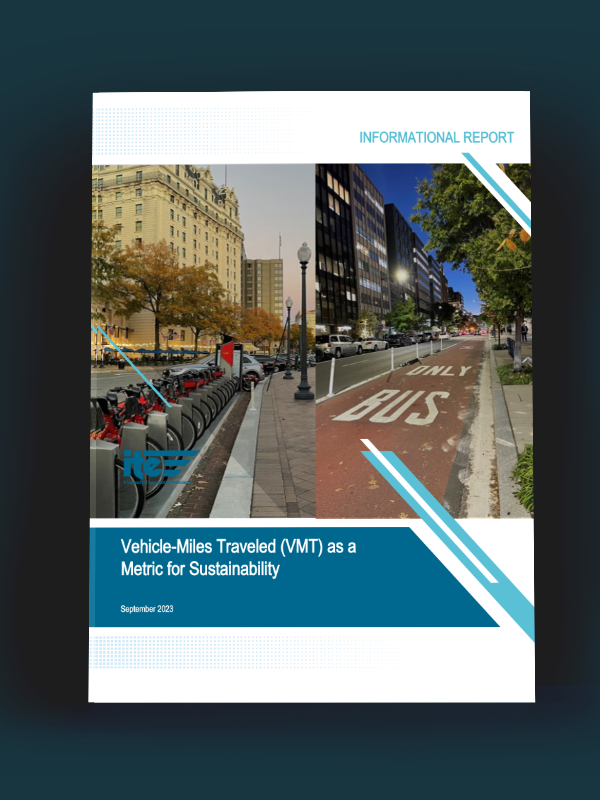
Using VMT to Promote Sustainability
As planning strategies evolve from vehicle-centric to a multimodal, accessibility-focused approach, the focus is on moving people efficiently over vehicles. The new paradigm emphasizes sustainable transportation modes and underscores the significance of Vehicle Miles Traveled (VMT) as a crucial metric. VMT reduction benefits traffic flow, infrastructure costs, community well-being, pollution reduction, non-driver accessibility, and public health.
We’re excited to introduce ITE’s new technical brief, Vehicle-Miles Traveled (VMT) as a Metric for Sustainability. This resource, which includes contributions from our nationwide VMT expert Ron Milam, covers the shift from vehicle-based planning to accessibility-based planning, providing insights and case studies for transportation agencies and practitioners striving to enhance equity, safety, environmental sustainability, and community livability.
share this article
Explore More
Programmatic Infill Development Incentives
This white paper discusses the role of state and regional programs like REAP, SACOG’s Green Means Go, and MTC’s Priority Development Areas in supporting infill projects.

Berkely Vision Zero Action Plan
Berkeley’s Vision Zero Action Plan lays out a strategy to eliminate serious and fatal traffic crashes by 2028, using a data-driven, equity-focused approach to improve safety on the city’s highest-risk streets.

VMT Factors Specific to California Senate Bill 743
Traditional traffic models often miss current travel patterns. Our new method uses recent data to better estimate how much people drive, helping with SB 743 compliance.