

The modeling lexicon breaks down each metric by name, and provides both the model type used to create it and a definition description for full explanation. Designed as a quick-reference chart, the lexicon provides important information and clarification across all the different VMT metrics, assisting the user in effectively navigating VMT calculations of all types.
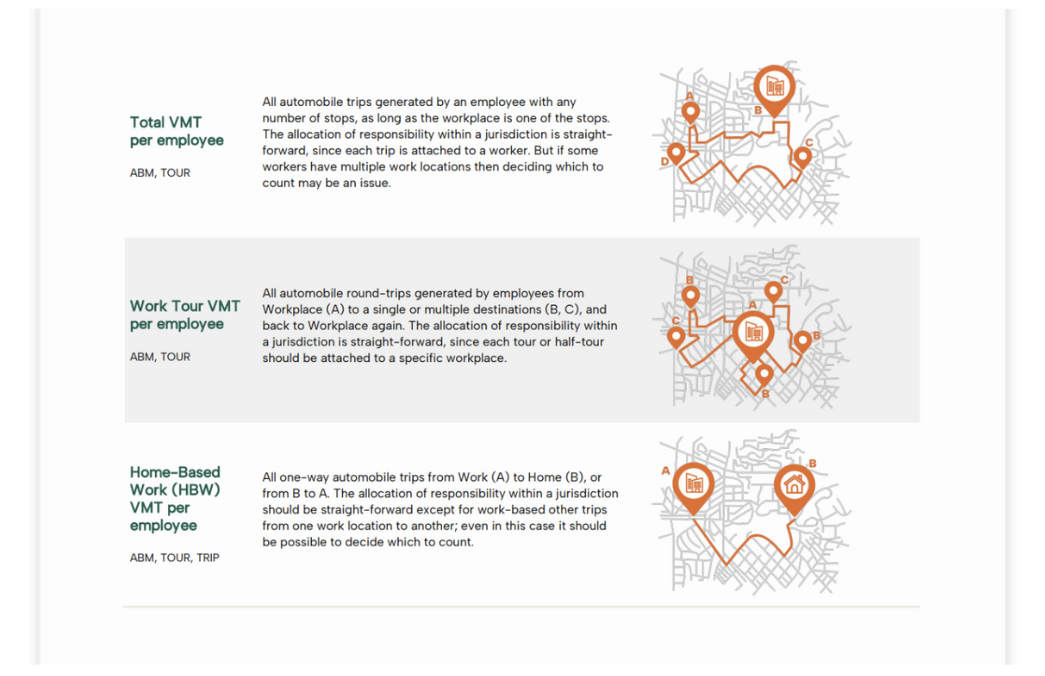
Using Our Lexicon Reference
We invite you to explore our VMT Modeling Lexicon, and we are open to comments and input for enhancements to it as well. The lexicon is intended as a helpful reference for unpacking the complexities of VMT analysis and as a road map for accurate calculations.
Are you interested in learning more about VMT metrics, modeling, or California Senate Bill 743 implementation and planning?
share this article
Explore More

New Office in Sonoma County
Fehr & Peers is proud to announce the opening of our Petaluma office space! As we continue in our dedication to providing innovative transportation solutions that improve communities, our Petaluma location will allow us to better support our existing and future clients throughout Sonoma, Napa, Marin, Mendocino and Lake Counties.

Growth in Micromobility
The Institute of Transportation Engineers (ITE) Pedestrian and Bicycle Standing Committee developed the Micromobility Facility Design Guide Informational Report, which summarizes potential design challenges micromobility users experience as they travel on typical roadways.
2021 Staff Promotions
As part of the Fehr & Peers culture of empowerment, we congratulate over 130 team members on earning promotions and feature 44 individuals achieving step-level promotions effective July 1.