

The modeling lexicon breaks down each metric by name, and provides both the model type used to create it and a definition description for full explanation. Designed as a quick-reference chart, the lexicon provides important information and clarification across all the different VMT metrics, assisting the user in effectively navigating VMT calculations of all types.
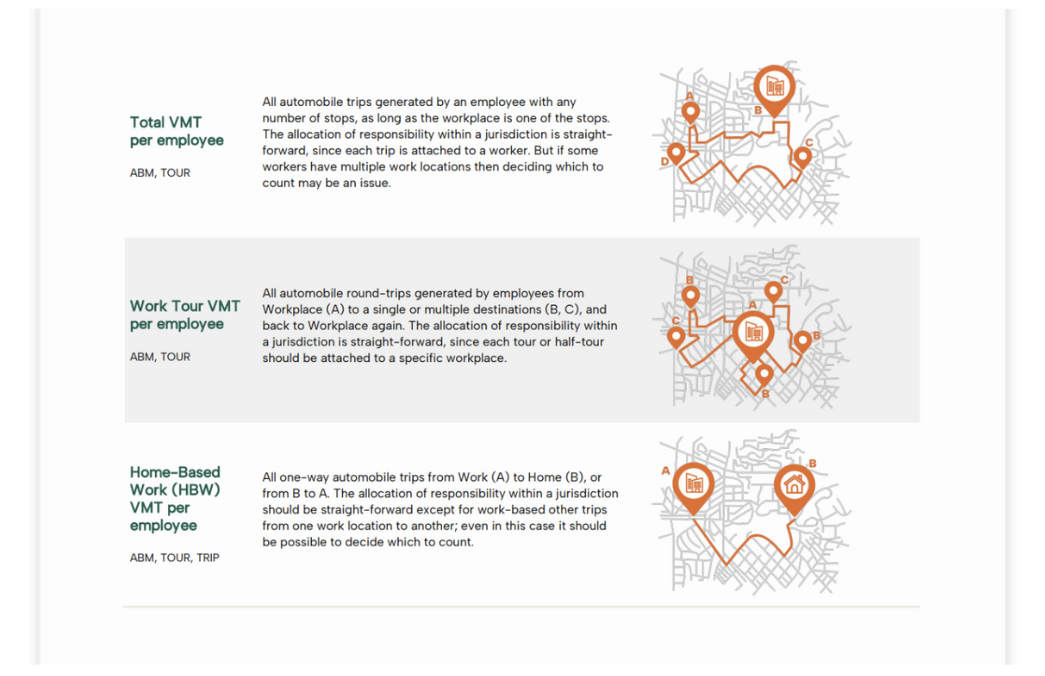
Using Our Lexicon Reference
We invite you to explore our VMT Modeling Lexicon, and we are open to comments and input for enhancements to it as well. The lexicon is intended as a helpful reference for unpacking the complexities of VMT analysis and as a road map for accurate calculations.
Are you interested in learning more about VMT metrics, modeling, or California Senate Bill 743 implementation and planning?
share this article
Explore More

Berkely Vision Zero Action Plan
Berkeley’s Vision Zero Action Plan lays out a strategy to eliminate serious and fatal traffic crashes by 2028, using a data-driven, equity-focused approach to improve safety on the city’s highest-risk streets.

VMT Factors Specific to California Senate Bill 743
Traditional traffic models often miss current travel patterns. Our new method uses recent data to better estimate how much people drive, helping with SB 743 compliance.

SB 743 Overview
This overview details the advantages of using location-based services (LBS) data over traditional travel demand models, outlines the methodology for calculating VMT, and offers definitions for key metrics segmented by trip purpose and residence classification.