
Street Safety in an Autonomous Vehicle Future
Street Safety in an Autonomous Vehicle Future
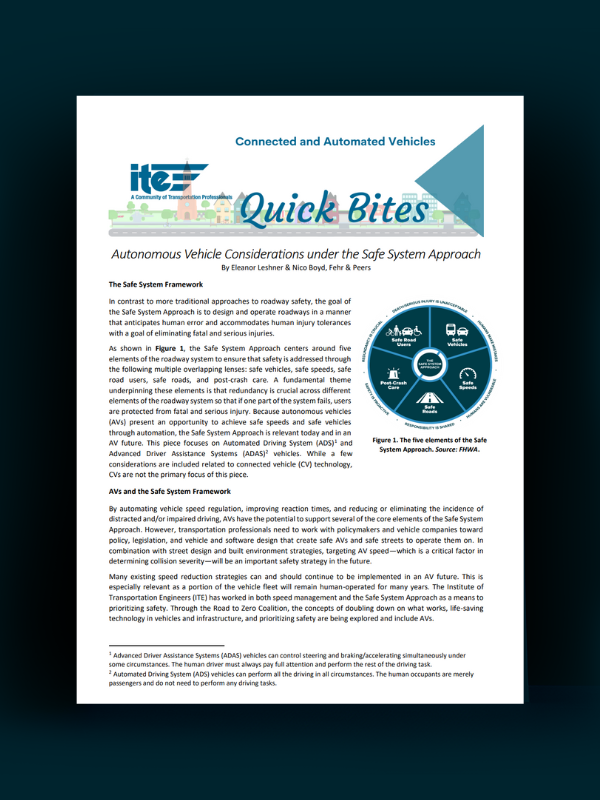
In contrast to more traditional roadway safety approaches, the Safe System approach strives to design and operate our vehicles and infrastructure in a manner that anticipates human error and accommodates human injury tolerances with a goal of eliminating fatal and serious injuries. By automating vehicle speed regulation, improving reaction times, and reducing or eliminating the incidence of distracted and/or impaired driving, autonomous vehicles (AVs) have the potential to support several core elements of the Safe System approach. However, recent trends in traffic-related pedestrian deaths and speeding-related collisions raise increasing concerns and a need for transportation professionals to work with policymakers and vehicle companies toward policy, legislation, and vehicle/software design that create safe AVs—and safe streets to operate them on.
As a direct result of these alarming trends and uncertainty regarding the potential impacts of AVs on safety outcomes, Fehr & Peers partnered with ITE to publish “Autonomous Vehicle Considerations under a Safe System Framework,” which provides a concise summary of potential AV benefits, risks, and other considerations within the Safe System framework. For a more detailed look at street safety considerations for an AV future, we invite you to explore the ITE “Quick Bite.” The article highlights how transportation engineers and planners can design roadways taking “evergreen” safety principles into account, both for today and in the future.
share this article
Explore More
Prioritizing People in Multimodal Design
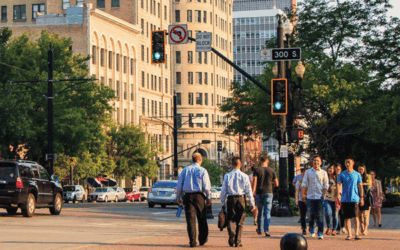
Discover how one city is redesigning their streets to make experiencing destinations safer and more enjoyable, and how their process and design typology can be adapted to streets across the US.
Quantifying VMT Reduction
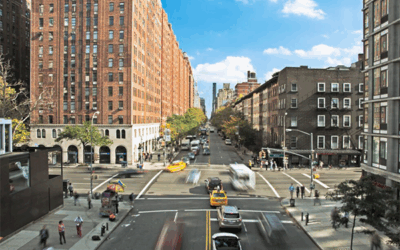
How can transportation agencies reduce overall vehicle miles traveled and still generate revenue? In a recent study, we evaluated the impact of making transit free of charge compared to implementing a VMT tax and whether the costs for travelers is equitable.
Achieving Freight Greenhouse Gas Goals
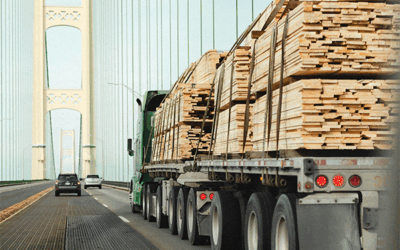
Available guidance for agencies to gather an accurate picture of current freight activity is limited. Check out how this community defined their baseline in four steps to be able to evaluate freight zero emission zones as a strategy for meeting new climate and environmental policy goals.