
Shifting To an Urban Mindset

Shifting To an Urban Mindset
In addition to tourist ebbs and flows, at its heart, the City’s initiative was fueled by a desire to improve conditions for children trying to get to school, service workers navigating without vehicles to get to work, and college students and everyday residents desiring to walk and bike but simply not feeling safe to do so. This spurred the City to begin reimagining its streets, yet it also showed its savvy in recognizing the economic benefit being generated by an organic biking culture developing by those who visited. With this dual emphasis in mind, we helped the City launch a robust community outreach plan to understand local needs, create a vision, and identify needed infrastructure upgrades to address issues its streets were not designed for. Engaging the public through an open house, bike and walk audits, a dozen intercept events, nine focus groups, and an online survey yielding over 600 responses, key findings revealed that nearly 95% of respondents would like to walk and bike more in Grand Junction. Weaving this into their first-ever Pedestrian & Bicycle Plan, we helped them create a road map of how to build out their bike and pedestrian network over time and curate their vision of becoming a city where all could safely and conveniently actively travel on a connected and well-maintained network.

Applying our in-house tool, Streetscore+, we could quickly and effectively calculate comfort for people biking and walking on any street within the city and planning area. Community participants helped us use the tool to compare designs and evaluate relative benefits and think through prioritization.
A Low Stress Pedestrian & Bicycle Network
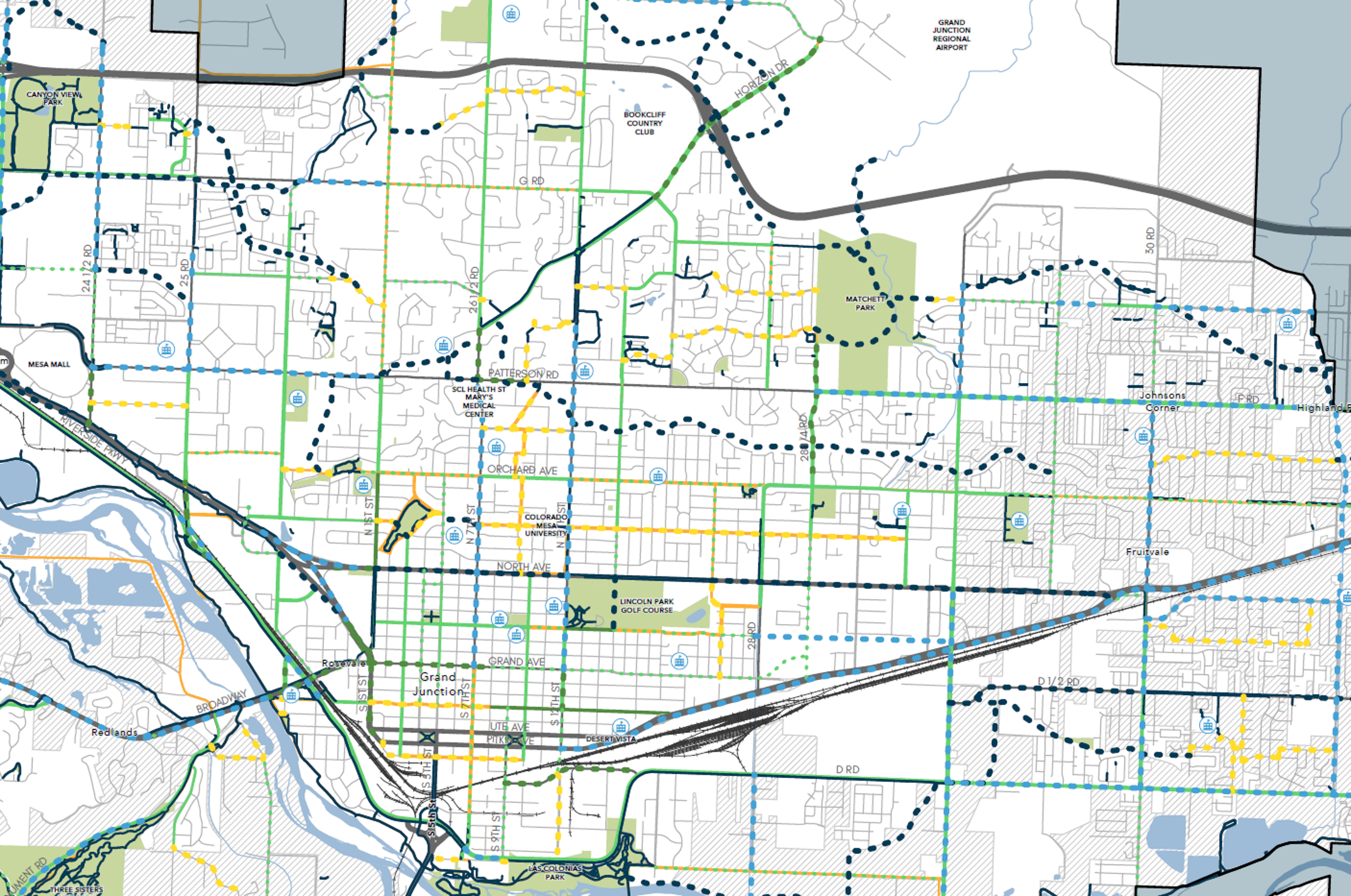
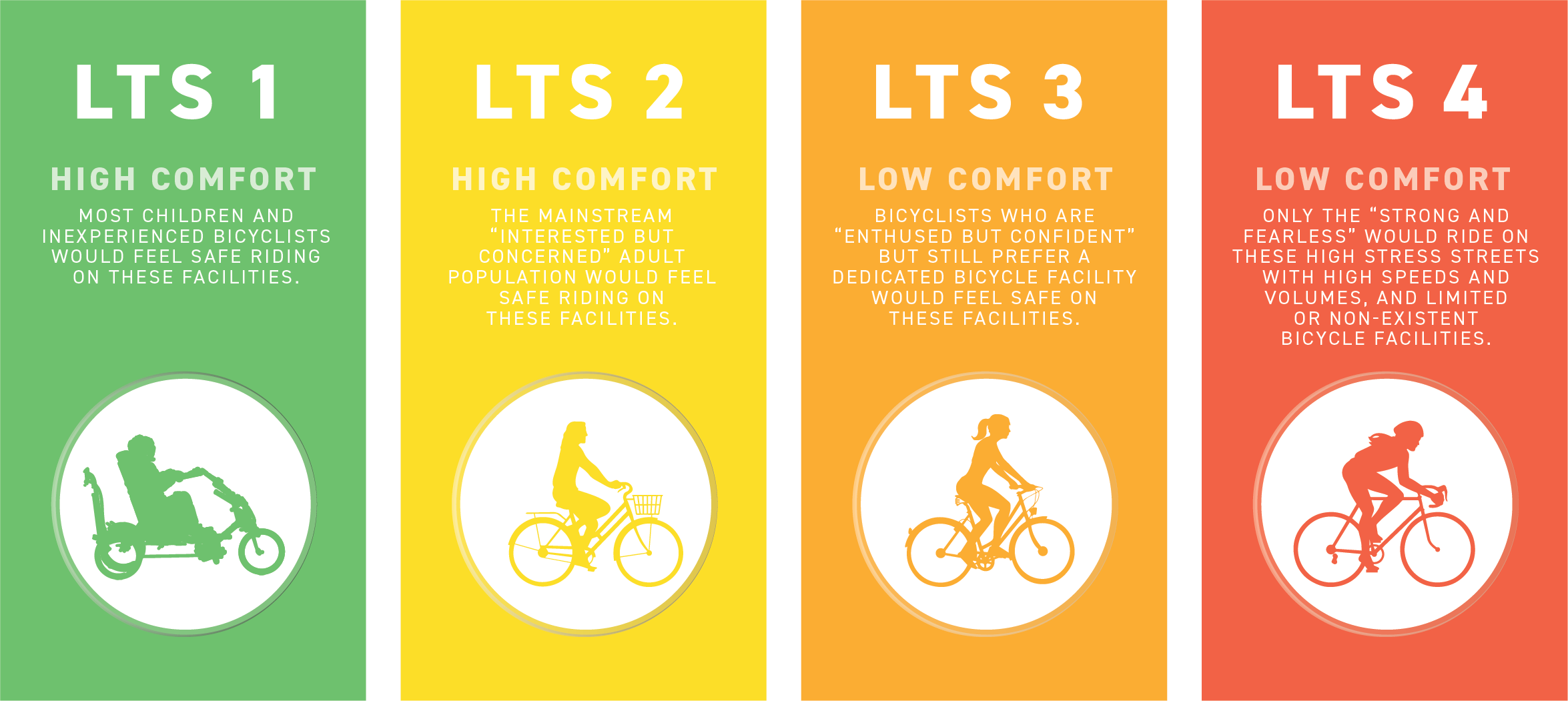
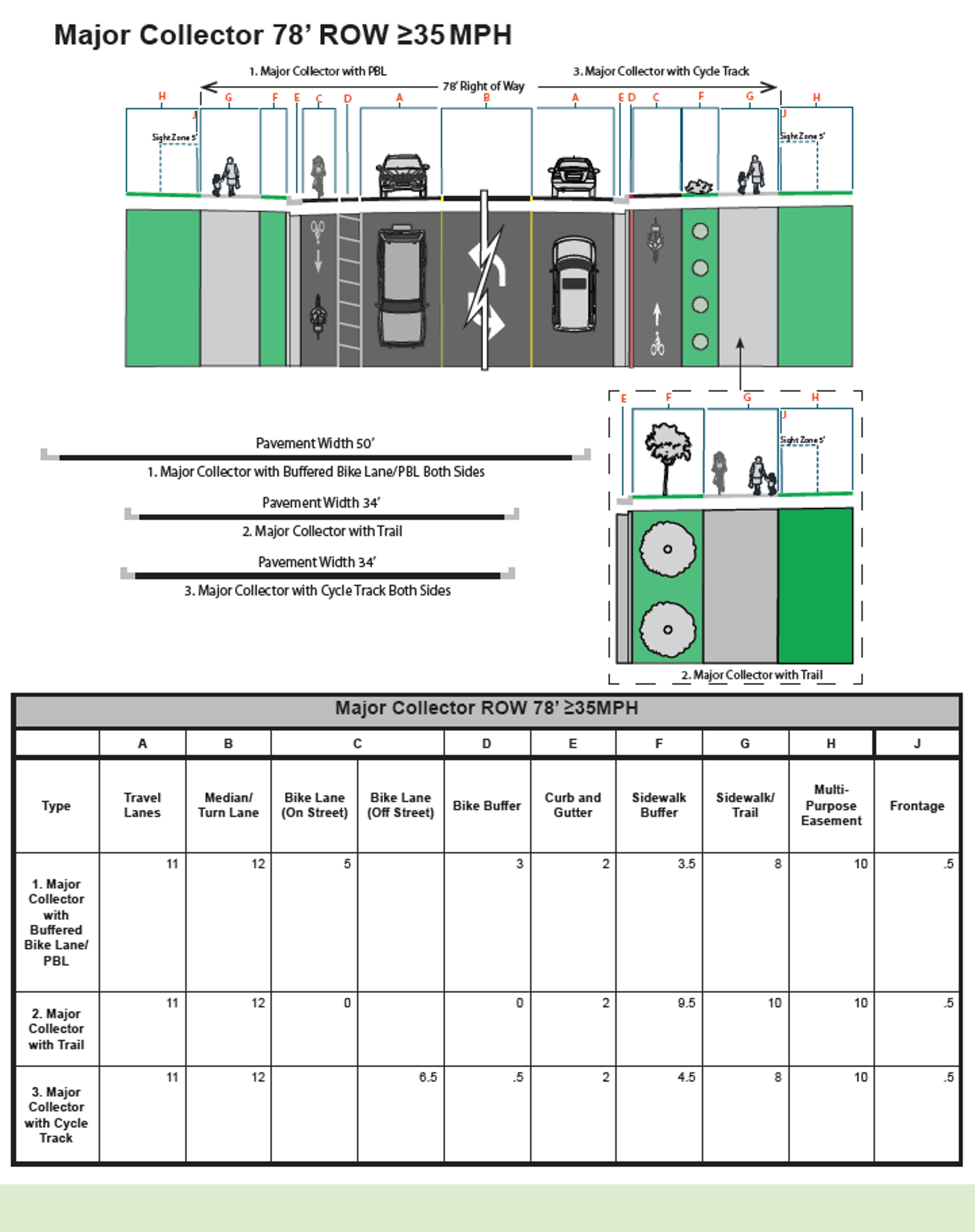
This emphasis on safety and comfort was purposefully aligned to the City’s broader design and construction initiative. To ensure that their street design also reflected the Pedestrian and Bicycle Plan’s vision, we helped update their Transportation Engineering and Design Standards (TEDS) manual, which sets street design standards. By aligning these standards with the plan, we’re helping the City mark a significant shift from prioritizing cars to ensuring safe, multimodal travel across all users. This complete streets approach underscores the City’s commitment to safety and active transportation.
Update to the Grand Junction Transportation & Engineering Design Standards
Since arriving in Denver in 2000, Fehr & Peers has continued to support the expansion of bikeway networks throughout the region.
Denver Moves: Bike Update
Denver Moves: Pedestrians & Trails
Denver Bicycle Community Network Planning
Denver Pedestrian Crossing Guidelines
Denver Bikeway Designs
Brighton Bicycle, Pedestrian, & Multimodal Plan
Boulder Low Stress Walk and Bike Network Plan
Fruita Active Circulation Plan
Longmont Enhanced Multiuse Corridor Plan
Contributors

Explore More

Evolving Standard Validation Practices for Traffic Data
In part one of a two-part series on traffic volume estimation and StreetLight validation, we examine key questions to understand the possible variations for two industry standard methods.

Erin Ferguson Joins Fehr & Peers
National Safety Expert Erin Ferguson joins the Fehr & Peers San Francisco office, bringing 17 years of industry knowledge and experience in multimodal planning, complete streets, and safety. We look forward to the innovative ideas and project leadership expertise Erin will provide in helping us transform transportation consulting in the Bay Area for clients and communities.
Travel Forecasting Model Suitability for Environmental Impact Analysis
This guide helps transportation professionals determine if their travel forecasting models are suitable for environmental impact analyses, ensuring compliance with laws like NEPA and CEQA.