
A New Focus on Climate & Congestion

A New Focus on Climate & Congestion

You want to travel freely.
Today, less than 35% of vehicle seats are filled on urban freeways during peak hours even though demand overwhelms available capacity. As public infrastructure, this level of efficiency raises questions about whether the roadway space is being wisely used. It also raises questions about how performance is traditionally measured.

Everyone wants to travel freely.
Freeways are often described as having problems when they are congested due to slow speeds instead of having too many unfilled seats. To some degree, this outcome is a result of cultural preferences for driving personal vehicles. This preference rates high on personal freedom, comfort, and convenience, but low on efficient use of the limited public roadway supply. If greater efficiency of the roadway network is desirable (i.e., more seats occupied) to improve travel reliability and reduce adverse travel effects such as delay, wasted fuel and air pollution, then demand management is essential.

Managing travel demand helps.
Demand management can include a range of strategies from how roadways are operated and controlled to behavioral incentives that influence when and how much people travel and by what modes. These strategies often require some tradeoffs between personal travel freedom and greater network efficiency or utilization. How to balance these tradeoffs is the essential question facing the public agencies that operate our roads.
share this article
Explore More

Leveraging Grant Funds to Reach Vision Zero
Acquiring funding through grants and safety programs can challenging, but with appropriate planning and guidance, the process can be an easy first step in creating safe infrastructure systems.

Equity & Infrastructure Improvements
It’s not always clear which community members and roadway users are likely to benefit from large-scale infrastructure investments. Learn how activity-based models can help.
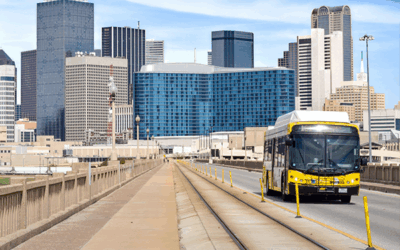
Fehr & Peers in Dallas, Texas
We are excited to announce our expansion to Texas! With proximity to downtown Dallas, establishing roots here allows us to continue to provide for and deepen our relationships with clients in the DFW Metroplex and beyond.