
Land Conservation and VMT Reduction Analysis
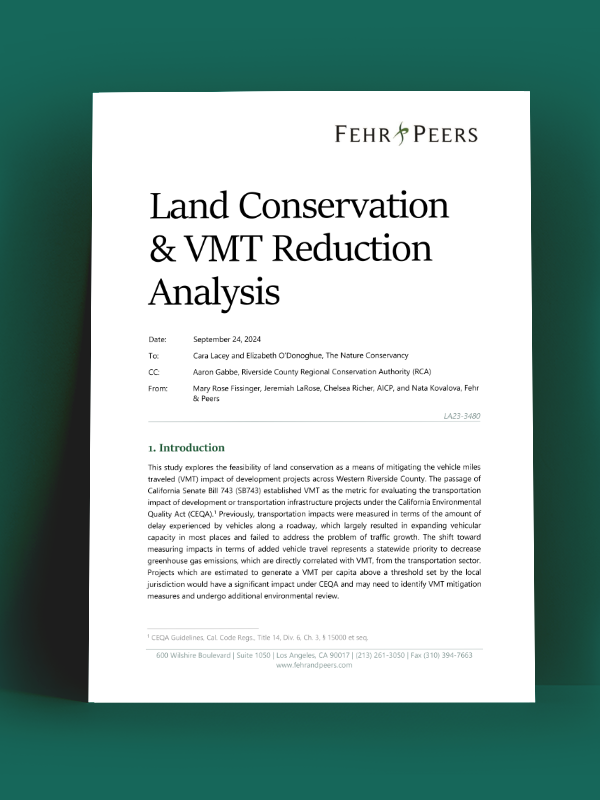
Land Conservation and VMT Reduction Analysis
Policies targeted at reducing Vehicle Miles Traveled (VMT) can be a powerful tool for advancing sustainable land development patterns. Our new white paper explores how VMT mitigation programs could protect biodiversity, preserve critical habitats, and support land conservation.
We recently worked with the Western Riverside County Regional Conservation Authority (RCA) and The Nature Conservancy to explore how VMT credits could be leveraged to fund conservation efforts, aligning transportation and conservation goals. By converting high-VMT parcels into conservation areas and instead encouraging development in lower-VMT areas, this approach helps combat sprawl while achieving long-term environmental benefits.
Read the full white paper to learn more about this innovative strategy, and contact us to explore how it could apply to your projects.
share this article
Contributors

Chelsea Richer
Climate & Resilience Discipline Leader
AICP
Email Me

Mary Rose Fissinger
Senior Engineer/Planner
Email Me

Jeremiah LaRose
Senior Associate
Email Me

Nata Kovalova
Engineer/Planner
Email Me
Explore More

Staff Certifications 2022
We are excited to celebrate our staff and their pursuit of professional growth and thank them for their dedication and passion for serving communities.

Telework and VMT
Does working remotely mean we are driving less? The answer might surprise you.
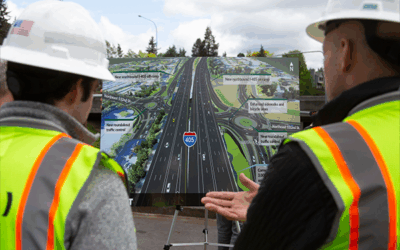
A New Way To Build Transportation Capacity
Learn how a coalition of jurisdictions and community groups in Washington State pioneered a large-scale multimodal transportation planning approach that has improved highway capacity over the last twenty years and continues to guide future investments.