
A commitment to Vision Zero requires institutionalizing a new way of thinking about safety, the Safe System approach, into everything we do. As transportation planners and engineers, one of our most frequent project types is a transportation impact assessment for new developments. How do we build land development projects that are not only accessible, but safely accessible, by every mode of transportation?
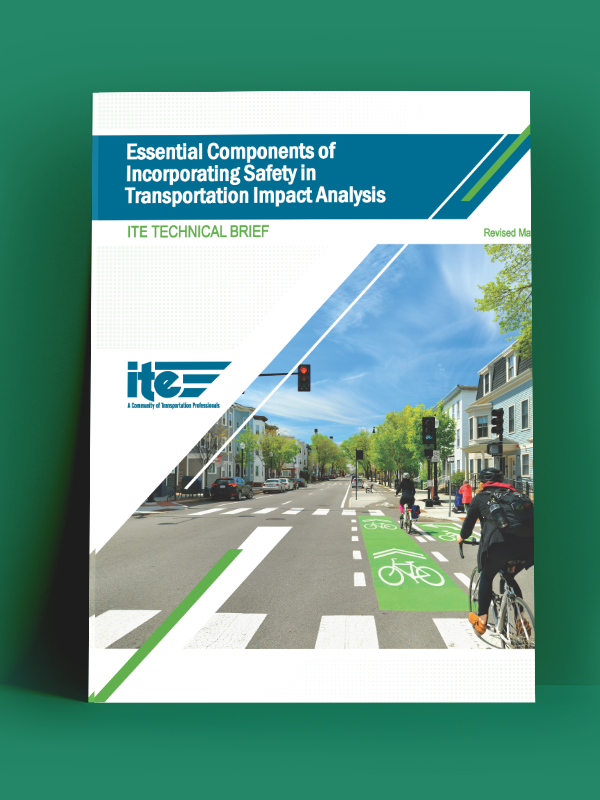
ITE’s new technical brief Essential Components of Incorporating Safety in Transportation Impact Analysis describes a comprehensive way for public agencies to incorporate the Safe System approach in project reviews. It can help transportation professionals to build proactive, multimodal safety considerations into transportation impact analysis reports. The brief describes eleven core elements with examples of impact methodology and a framework for selecting the methodology best suited for the jurisdiction and project. Mitigations and funding are also discussed, along with links to resources to further explore this topic.
Those who might be interested include:
• Agency practitioners and consultants seeking ways to institutionalize safety and fund safety enhancements, including those looking to implement existing safety plans
• Developers and consultants responding to development guidelines
• Professionals and students learning about impact analysis practices
We are proud to have served as the lead authors of this resource. Contact us to learn more about how Fehr & Peers can help your agency apply this guidance.
share this article
Explore More

Navigating Long-Term Transit: Planning in an Uncertain Time
We’re partnering with the Whatcom Transportation Authority in Bellingham, Washington to plan the long-term future and develop a strategy for restarting transit service, welcoming back riders, and ensuring riders can safely get where they would like to go. See what’s in the works.

A Transformative Data Collection Solution: Responding with Our Research
We’ve completed an independent, third-party validation review of StreetLight Data’s intersection turning movement volume estimates. See what we found!

VMT Mitigation Through Fees, Banks, and Exchanges
On September 27, 2013, Governor Jerry Brown signed SB 743 into law and started a process intended to fundamentally change transportation impact analysis as part of CEQA compliance. These changes include elimination of auto delay, level of service (LOS), and other similar measures of vehicular capacity or traffic congestion as a basis for determining significant impacts. Instead, transportation impacts will be determined based on changes to vehicle miles of travel (VMT).