
Highway Traffic Forecasting
Highway Traffic Forecasting
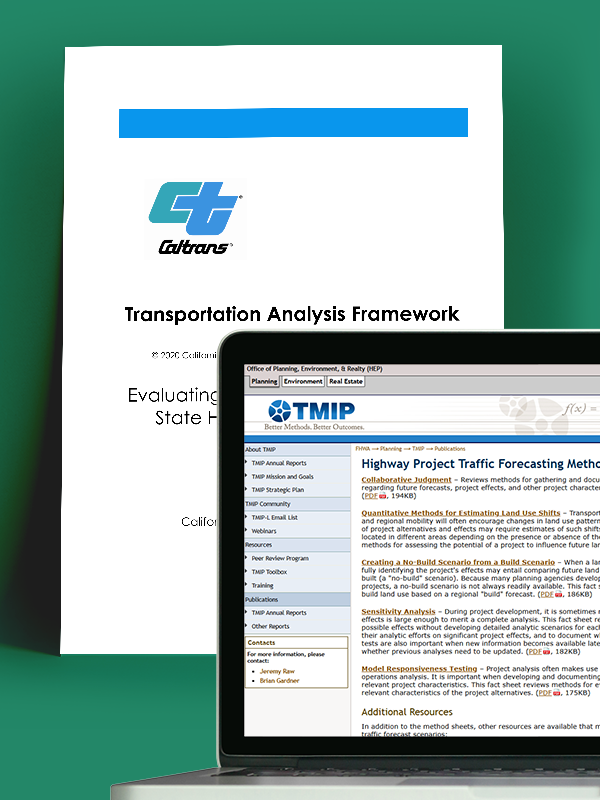
Whether framed for sustainability, greenhouse gas reduction, safety, or land use efficiency, Vehicle Miles Traveled (VMT) is aligned with the values of many cities, counties, and even states as a critical metric to support desired transportation outcomes. Induced VMT refers to the phenomenon where building or expanding highway capacity can lead to a rise in overall vehicle travel that dampens congestion relief benefits and contributes to higher levels of air pollutant and GHG emissions. Understanding induced VMT becomes imperative for policymakers to address this complex issue while striving for balanced solutions that promote mobility without an overreliance on automobiles.
For those interested in induced VMT and how transportation projects contribute to VMT impacts, we are excited to announce a new federal resource as well as California state guidance that includes technical input from our national VMT experts listed below.
share this article
Contributors

Ron Milam
Forecasting Practice Leader
AICP, PTP
Email Me

Jerry Walters
Principal

Chris Breiland
Director of Research & Development
PE
Email Me

Bruce Griesenbeck
Transportation Analyst
Email Me


Explore More
Still Getting Trip Generation Right: Revalidating MXD+
State-of-the-practice analytical methods should be employed when estimating the trip generation of mixed-use projects. In the latest issue of the American Planning Association’s PAS Memo, John Gard and Corwin Bell of Fehr & Peers describe the advantages, analysis techniques, and use of MXD+ through actual site case studies.

Evolving Visual Communications in a Dynamic World
Partnering with our client, we took on new visual communications strategies through the lens of equitable engagement to elevate participation and build energy around safety improvements.

Infrastructure Projects & Greenhouse Gas Emissions
Can freeway infrastructure projects have a greenhouse gas emission benefit by improving travel speeds and reducing tailpipe emissions? Explore the corridor level results of three project case studies using different modeling approaches.