
Highway Traffic Forecasting
Highway Traffic Forecasting
Whether framed for sustainability, greenhouse gas reduction, safety, or land use efficiency, Vehicle Miles Traveled (VMT) is aligned with the values of many cities, counties, and even states as a critical metric to support desired transportation outcomes. Induced VMT refers to the phenomenon where building or expanding highway capacity can lead to a rise in overall vehicle travel that dampens congestion relief benefits and contributes to higher levels of air pollutant and GHG emissions. Understanding induced VMT becomes imperative for policymakers to address this complex issue while striving for balanced solutions that promote mobility without an overreliance on automobiles.
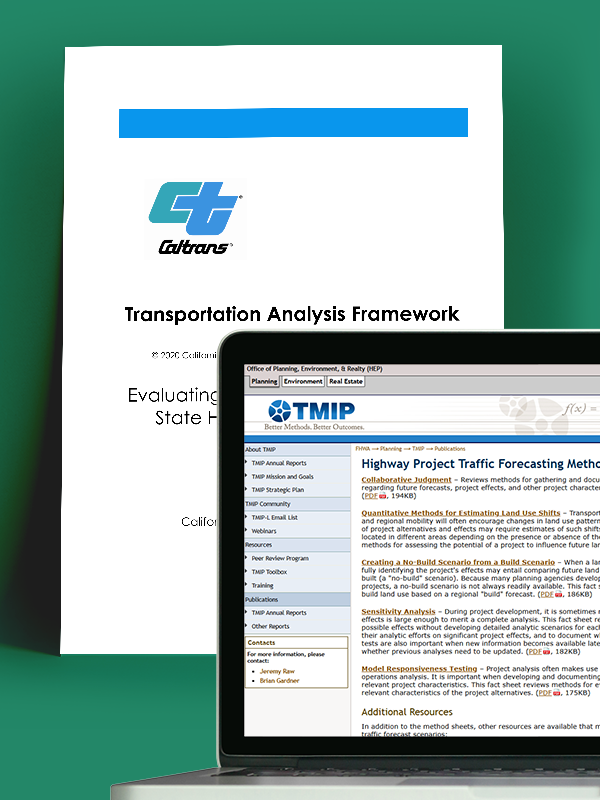
For those interested in induced VMT and how transportation projects contribute to VMT impacts, we are excited to announce a new federal resource as well as California state guidance that includes technical input from our national VMT experts listed below.
share this article
Contributors

Ron Milam
Forecasting Practice Leader
AICP, PTP
Email Me

Jerry Walters
Principal

Chris Breiland
Director of Research & Development
PE
Email Me

Bruce Griesenbeck
Transportation Analyst
Email Me


Explore More

Marissa Aho Joins Fehr & Peers
As climate risk reshapes transportation planning, public agencies need strategies that connect resilience with everyday investment decisions. Marissa Aho, FAICP, brings decades of experience helping cities and regions turn climate risk into practical, fundable actions. Learn how her leadership expands our climate adaptation and resilience practice and strengthens the support we provide to communities.

2026 Staff Promotions
Join us in congratulating the 167 team members who earned promotions for their outstanding contributions this year.

Driving Less Starts with Building Differently
How much can planning decisions actually reduce driving? Our latest research introduces a statistical model that links built environment choices—such as density, transit service, walkability, and land use mix—to vehicle miles traveled (VMT). The findings give planners and policymakers practical, evidence-based tools to evaluate scenarios, understand tradeoffs, and make more informed transportation and land use decisions.