
Highway Traffic Forecasting
Highway Traffic Forecasting
Whether framed for sustainability, greenhouse gas reduction, safety, or land use efficiency, Vehicle Miles Traveled (VMT) is aligned with the values of many cities, counties, and even states as a critical metric to support desired transportation outcomes. Induced VMT refers to the phenomenon where building or expanding highway capacity can lead to a rise in overall vehicle travel that dampens congestion relief benefits and contributes to higher levels of air pollutant and GHG emissions. Understanding induced VMT becomes imperative for policymakers to address this complex issue while striving for balanced solutions that promote mobility without an overreliance on automobiles.
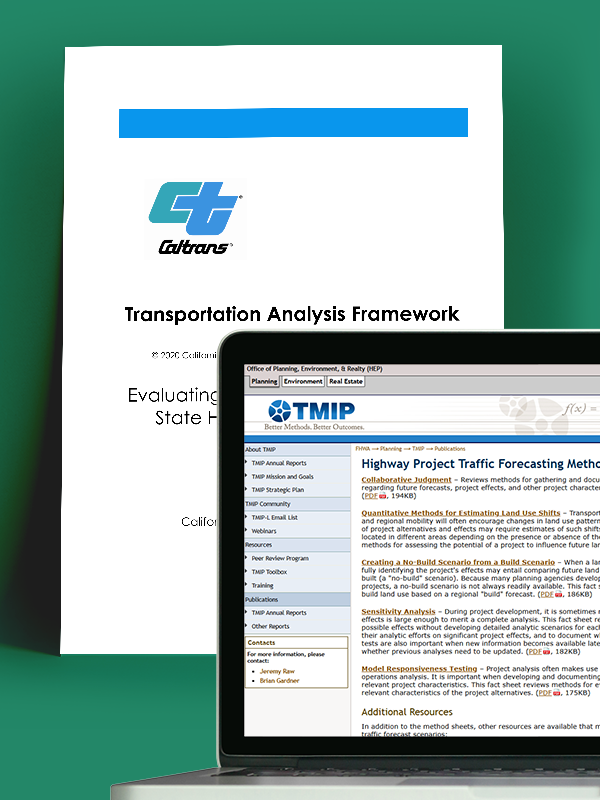
For those interested in induced VMT and how transportation projects contribute to VMT impacts, we are excited to announce a new federal resource as well as California state guidance that includes technical input from our national VMT experts listed below.
share this article
Contributors

Ron Milam
Forecasting Practice Leader
AICP, PTP
Email Me

Jerry Walters
Principal

Chris Breiland
Director of Research & Development
PE
Email Me

Bruce Griesenbeck
Transportation Analyst
Email Me


Explore More

Programmatic Infill Development Incentives
This white paper discusses the role of state and regional programs like REAP, SACOG’s Green Means Go, and MTC’s Priority Development Areas in supporting infill projects.

Berkely Vision Zero Action Plan
Berkeley’s Vision Zero Action Plan lays out a strategy to eliminate serious and fatal traffic crashes by 2028, using a data-driven, equity-focused approach to improve safety on the city’s highest-risk streets.

VMT Factors Specific to California Senate Bill 743
Traditional traffic models often miss current travel patterns. Our new method uses recent data to better estimate how much people drive, helping with SB 743 compliance.