
Help Shape a Generative AI Policy Starter Kit for Transportation Organizations

Generative AI is moving fast across transportation planning and engineering. Governance is often moving slower.
We’re in a listening phase and starting work on a Generative AI Policy Starter Kit, a practical resource with sample policy language, approval workflows, and FAQs designed to support responsible AI governance.
Through the Institute of Transportation Engineers (ITE) AI Great Ideas Group (AI GIG), we’re leading a volunteer effort with fellow ITE members to develop practical starting points that organizations can adapt to their context.
What We’re Building
The starter kit is organized around four focus areas that show up in almost every AI conversation:
1. Governance: Organizational Oversight
Roles and responsibilities, tool evaluation, and how decisions get made and maintained over time.
2. Secure Use: Data Confidentiality and Cybersecurity
What can and cannot go into AI tools, account considerations, and practical cybersecurity basics.
3. Ethical Use: Professional Responsibility
Professional obligations, disclosure, copyright and intellectual property, and protecting public trust.
4. Effective Use: Quality and Workflow Integration
QA/QC expectations, accountability, and “human in the loop” approaches for AI-assisted work.
What It Is Not
This starter kit is not a debate about whether AI should be used. It is also not a deep dive on which tasks are best suited for AI. It focuses on practical governance foundations and responsible implementation.
How You Can Help Shape It
If your agency, organization, or firm has developed or is developing AI guidance, we’d love to hear:
- Example language or workflows that you’d be willing to share (anonymized is acceptable)
- What policy or process questions have been the toughest to answer

share this article
Explore More
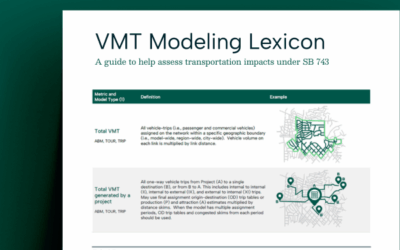
Understanding VMT Metrics: Explore Our Modeling Lexicon
CEQA’s July 1 deadline is swiftly approaching, making it increasingly important to be able to understand and navigate all types of VMT calculations. Our new quick-reference VMT lexicon makes that easier. Explore it now here.

Navigating Long-Term Transit: Planning in an Uncertain Time
We’re partnering with the Whatcom Transportation Authority in Bellingham, Washington to plan the long-term future and develop a strategy for restarting transit service, welcoming back riders, and ensuring riders can safely get where they would like to go. See what’s in the works.

A Transformative Data Collection Solution: Responding with Our Research
We’ve completed an independent, third-party validation review of StreetLight Data’s intersection turning movement volume estimates. See what we found!