
CAPCOA Quantifying Greenhouse Gas Mitigation Measures
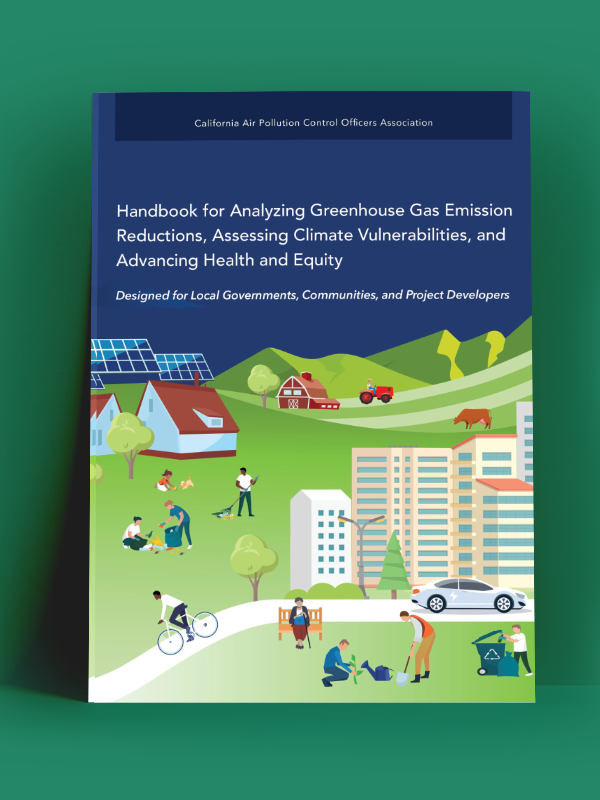
CAPCOA Quantifying Greenhouse Gas Mitigation Measures
Throughout the handbook there are a variety of updates that highlight current issues and strategies. A noteworthy update includes transportation mitigation strategies that have now been broken into two groups: those with sufficient substantial evidence through quantifiable measures and those requiring more evidence to support quantification (further details about the quantitative strategies begin on page 29 of the Handbook).
share this article
Explore More

Driving Less Starts with Building Differently
How much can planning decisions actually reduce driving? Our latest research introduces a statistical model that links built environment choices—such as density, transit service, walkability, and land use mix—to vehicle miles traveled (VMT). The findings give planners and policymakers practical, evidence-based tools to evaluate scenarios, understand tradeoffs, and make more informed transportation and land use decisions.
Navigating VMT Under CEQA
VMT under CEQA continues to evolve as agencies, practitioners, and decision makers work through analysis methods, mitigation feasibility, and defensible evidence. Our new Q&A resource offers practical answers on vehicle miles traveled, SB 743, mitigation program design, implementation, administration, and legal and strategic considerations.
Demand Management Is Injury Prevention
New research shows that reducing driving exposure may be one of the most powerful safety strategies available. The findings connect VMT, mode share, and travel time to fatality rates, reframing demand management as injury prevention.