
The Ws of Safety: Treating the System, Not the Symptom
The Ws of Safety: Treating the System, Not the Symptom
The US is entering its second decade of Vision Zero, a road safety initiative designed to eliminate all traffic-related deaths and serious injuries. But the conversation has evolved.
For years, transportation professionals relied on the traditional Es of safety—engineering, education, enforcement, and emergency services. These reactive measures, while important, often operate in silos and miss the bigger picture of how transportation systems as a whole can reduce risk.
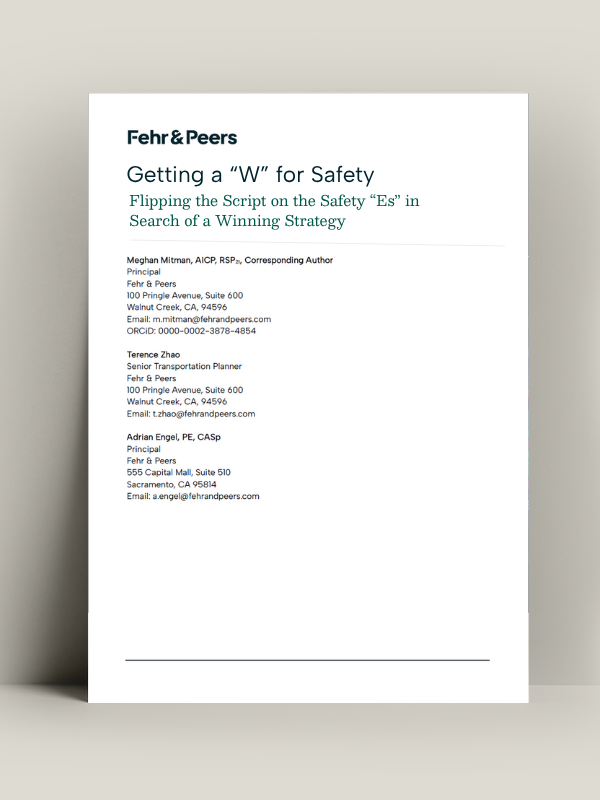
A new article in the Transportation Research Record (TRR), authored by several of our safety experts, shifts the focus from Es to the Ws—asking who, what, when, where, and why. The Ws of Safety framework can help uncover systemic risks and guide upstream interventions on the road to Vision Zero.
For transportation planners, engineers, and public agencies, the takeaway is clear: Vision Zero 2.0 requires more than refining the old tools. It calls for embedding the Safe System Approach into everyday practice and addressing systemic issues to shape roadway safety long before a crash occurs.
The Ws of Safety can help us achieve these goals.
Read Getting a “W” for Safety: Flipping the Script on the Safety “E”s in Search of a Winning Strategy:
share this article
Contributors

Meghan Mitman
Regional Principal-in-Charge
Email Me

Terence Zhao
Senior Transportation Planner
Email Me

Adrian Engel
Principal
Email Me
Explore More
Transforming Transit Access
Considering pursuing a Bay Area MTC station access grant or conducting a gap analysis for MTC’s Transit Oriented Communities policy? Check out three access plans highlighted by MTC as examples to follow.

The Synergy Between TSMO & ITS
Although they may seem similar, they actually complement each other to create a powerful partnership in intelligent transportation. Learn more here.
Bans & The Truck Parking Crisis
Learn about the collaborative efforts underway to ensure 1.4 million commercial truck drivers are granted safe and secure stops along their routes.