
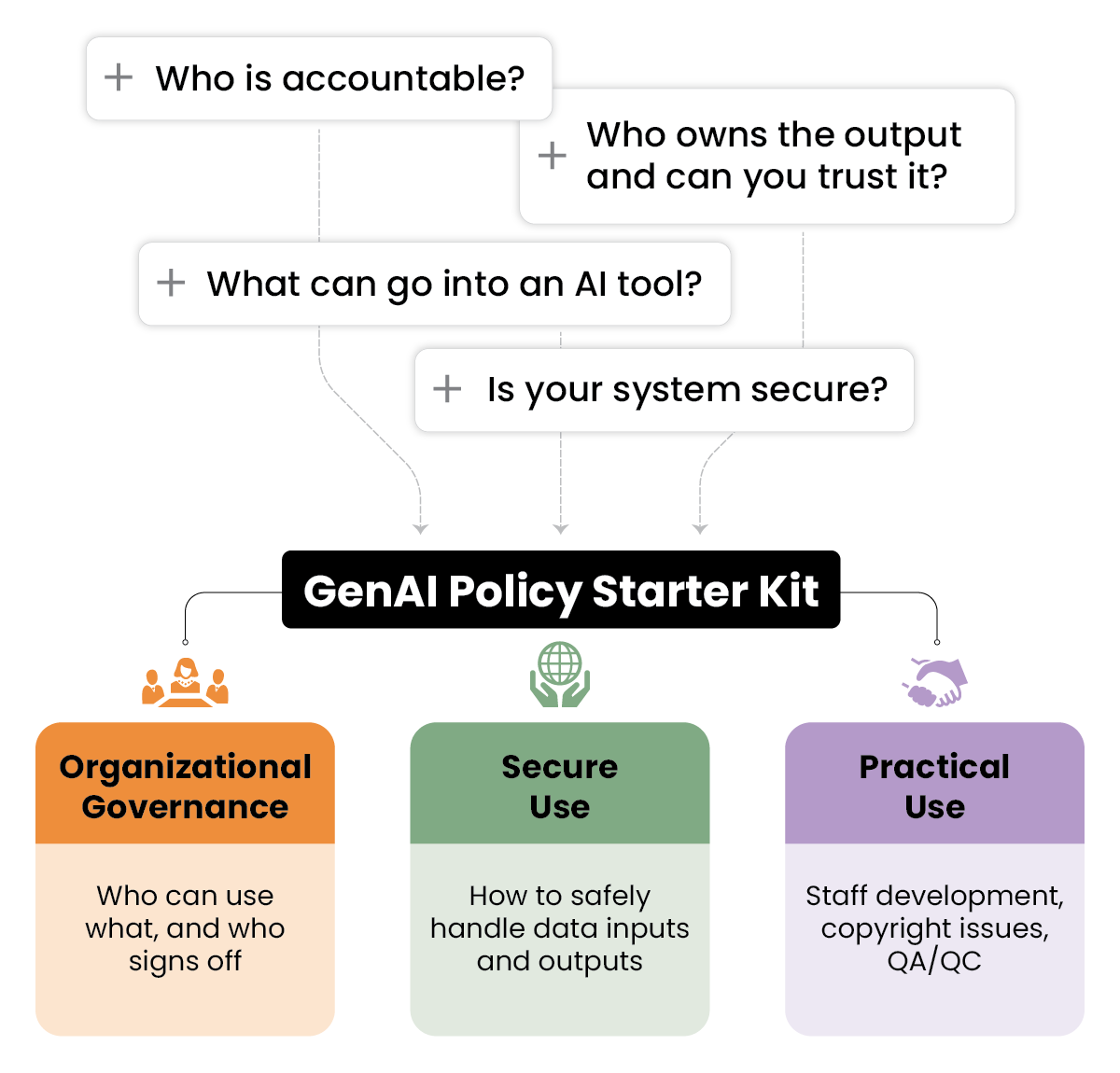
The Generative AI Policy Starter Kit will give agencies, firms, and other organizations a place to start when developing or refining their own AI guidance, along with takeaways individuals can apply in their everyday use of AI. Informed by input from transportation professionals, it will include considerations, case studies, sample policy language, and helpful checklists across three areas:
- Organizational Governance: Who can use what, who makes decisions, and who signs off.
- Secure Use: How to evaluate tools, handle data safely, and protect sensitive information.
- Practical Use: Professional responsibility, staff development, copyright and intellectual property, and QA/QC for AI-assisted work.
We led this volunteer effort and contributed a governance case study from our own firm, sharing how we’re approaching AI governance through clear ownership, input from across the company, and leadership checkpoints as our practices continue to evolve.
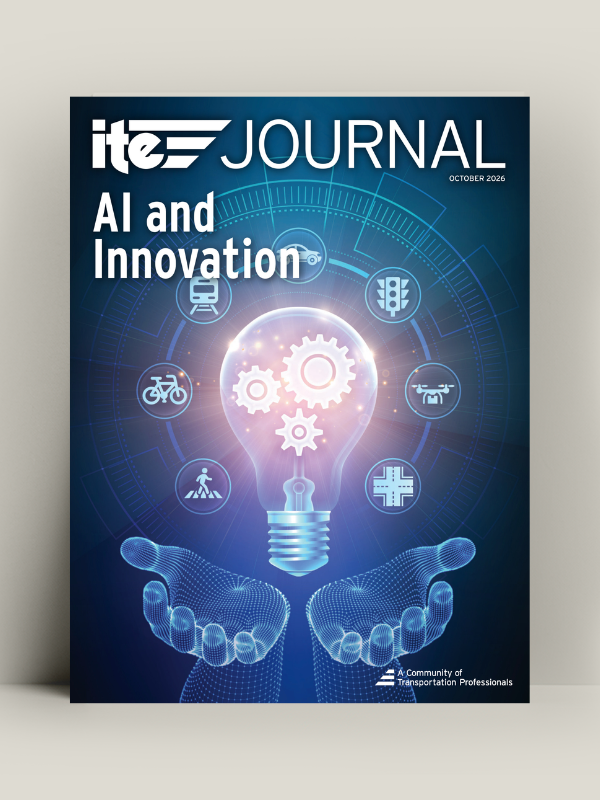
The full kit launches in November, alongside a launch webinar. Until then, two resources are ready to be explored now. The ITE Quick Bite overviews the kit’s contents, and the latest ITE Journal article, available to ITE members, explores two areas that continue to raise practical questions for transportation professionals: copyright and intellectual property, and QA/QC for AI-assisted work.
share this article
Connect with our Contributors

Krystle Li
Creative Designer
Email Me

Andy Kosinski
PE
Email Me
Explore More

Applications of Big Data in Safety Analysis
Check out the new ITE brief written for transportation professionals to determine the most effective data sources to apply when scoping, implementing, and evaluating safety projects.

Reclaiming a Concrete Desert
Learn how the once-touted largest single surface parking lot, now known as SDSU Mission Valley, is being reimagined. The new design is all about reducing the need for cars, improving mobility, and creating a vibrant, walkable, and bikeable environment for the local community to enjoy.

Priced Out
This white paper explores how housing subsidies can reduce driving by helping lower-income workers move closer to jobs and transit, improving access and cutting commute distances.