
What Is Downtown DC For?
The decongestion pricing debate is really a question about recovery, access, and what the city wants to become.
A perspective from Eric Womeldorff, Principal and Transportation Economics Practice Leader, Fehr & Peers Washington, DC

What Is Downtown DC For?
The decongestion pricing debate is really a question about recovery, access, and what the city wants to become.
A perspective from Eric Womeldorff, Principal and Transportation Economics Practice Leader, Fehr & Peers Washington, DC
Washington, DC is debating congestion pricing at a moment when downtown is still being redefined. The recently released decongestion pricing study has added new fuel to that conversation, but it has not resolved the harder question underneath it: what problem is the city actually trying to solve?
That is the focus of Eric Womeldorff’s brief. Rather than argue for or against pricing, he examines why this debate has become so difficult to settle and why the answer depends on how the city sees downtown’s future.
A few reasons this perspective is worth reading:
The status quo is not neutral.
Even without a formal charge, access to downtown already comes with costs in delay, frustration, and unreliable travel.
The study was built for a different city.
By the time it was released, commuting patterns, office demand, and the federal footprint had all shifted in meaningful ways.
The real disagreement is bigger than traffic.
The question is not only whether pricing would reduce congestion. It is also whether this is the right moment to manage downtown access differently while recovery is still uneven.
Eric has spent his career working at the intersection of land use, travel behavior, and transportation economics in some of the country’s most complex urban environments. He welcomes the conversation.
share this article
Contributor

Eric Womeldorff
Principal
Email Me
Explore More
SB 743 White Paper
SB 743 requires evaluating transportation impacts using VMT instead of Level of Service (LOS).
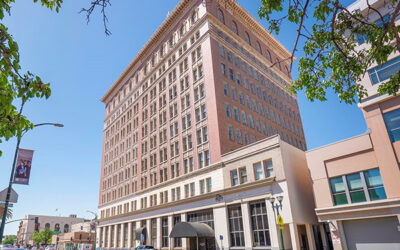
New Office in the Central Valley
Fehr & Peers proudly announces the opening of our Central Valley satellite office! Located in the heart of downtown Stockton, this office will help us continue to provide for and deepen our relationships with current Central Valley clients while further expanding our ability to serve the region.

VMT & GHG Reduction Strategies
Strategies like transit-oriented development, increasing residential density, and improving street connectivity can significantly reduce VMT and GHG emissions, with some measures achieving reductions of up to 31%.