

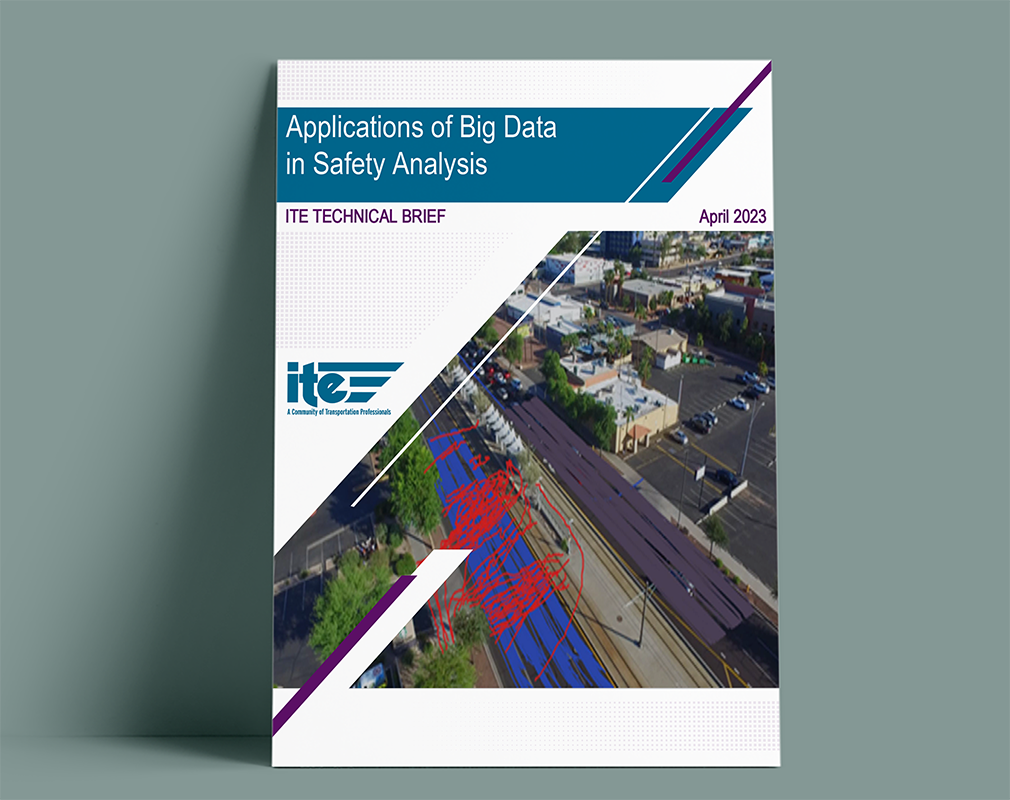
Big Data allows experts to look beyond traditional crash data. Traditional methods are useful in identifying high crash frequency locations; however, the downside is that they are reactive meaning a crash must occur for the data to be collected. Instead, Big Data is allowing practitioners to study a larger number of potential traffic incidents and trouble spots by evaluating specific contributing factors (i.e., driver behavior) to find out what might cause accidents before they happen. As technology improves and the industry shifts towards the use of even more advanced tools like real-time sensors and automated data collection systems, (i.e., Smart Cities), agencies will be able to proactively explore options for using Big Data as they upgrade and expand their existing systems.
To learn more about applying the right data sets to your safety projects, access the brief here. Be sure to tune in to the upcoming ITE webinar featuring ITE Brief co-author, Diwu Zhou, on May 23, 2023.
Contributors

Diwu Zhou
Senior Transportation Engineer
PE, RSP1

Meghan Mitman
RSP2I
Explore More

Guiding Fehr & Peers into the Future
We are pleased to announce that the shareholders of Fehr & Peers have unanimously elected Chris Mitchell, P.E. as the next President/CEO.
VMT Mitigation Spotlight
Since implementation of SB 743 in 2020, lead agencies using VMT have had questions emerge about VMT mitigation.

How Will Autonomous Vehicles Influence the Future of Travel?
Agencies dedicate a great deal of time and effort developing and using models to forecast future travel behavior.