

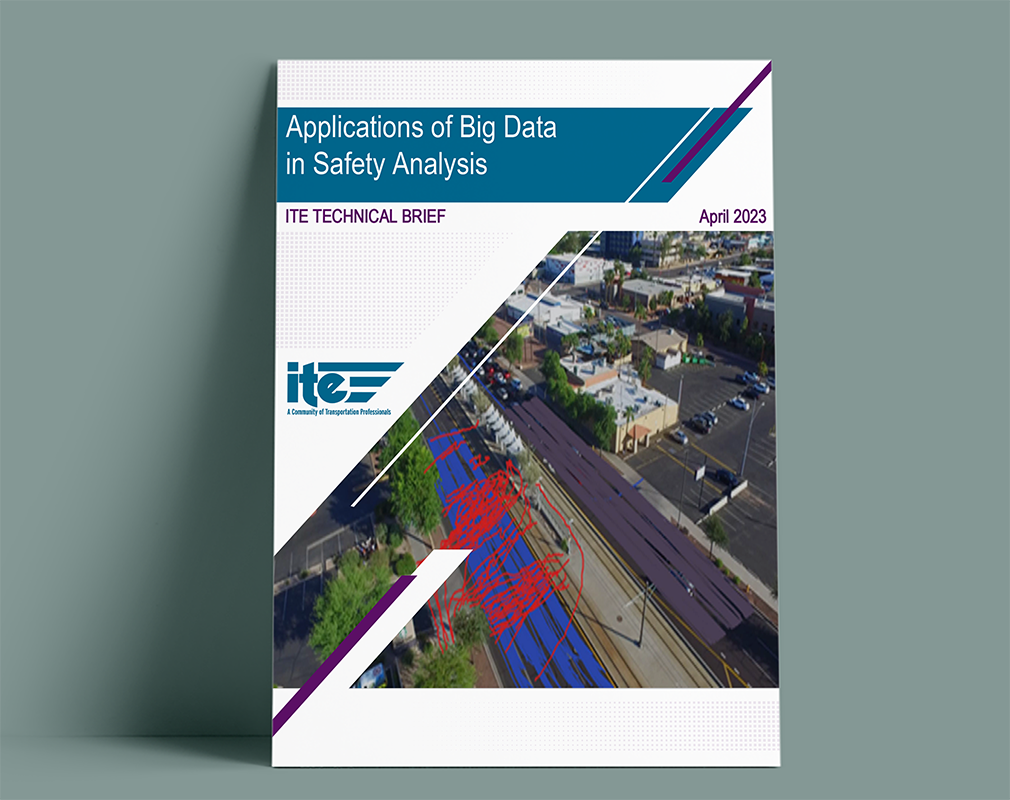
Big Data allows experts to look beyond traditional crash data. Traditional methods are useful in identifying high crash frequency locations; however, the downside is that they are reactive meaning a crash must occur for the data to be collected. Instead, Big Data is allowing practitioners to study a larger number of potential traffic incidents and trouble spots by evaluating specific contributing factors (i.e., driver behavior) to find out what might cause accidents before they happen. As technology improves and the industry shifts towards the use of even more advanced tools like real-time sensors and automated data collection systems, (i.e., Smart Cities), agencies will be able to proactively explore options for using Big Data as they upgrade and expand their existing systems.
To learn more about applying the right data sets to your safety projects, access the brief here. Be sure to tune in to the upcoming ITE webinar featuring ITE Brief co-author, Diwu Zhou, on May 23, 2023.
Contributors

Diwu Zhou
Senior Transportation Engineer
PE, RSP1

Meghan Mitman
RSP2I
Explore More

Navigating Long-Term Transit: Planning in an Uncertain Time
We’re partnering with the Whatcom Transportation Authority in Bellingham, Washington to plan the long-term future and develop a strategy for restarting transit service, welcoming back riders, and ensuring riders can safely get where they would like to go. See what’s in the works.

A Transformative Data Collection Solution: Responding with Our Research
We’ve completed an independent, third-party validation review of StreetLight Data’s intersection turning movement volume estimates. See what we found!

VMT Mitigation Through Fees, Banks, and Exchanges
On September 27, 2013, Governor Jerry Brown signed SB 743 into law and started a process intended to fundamentally change transportation impact analysis as part of CEQA compliance. These changes include elimination of auto delay, level of service (LOS), and other similar measures of vehicular capacity or traffic congestion as a basis for determining significant impacts. Instead, transportation impacts will be determined based on changes to vehicle miles of travel (VMT).