

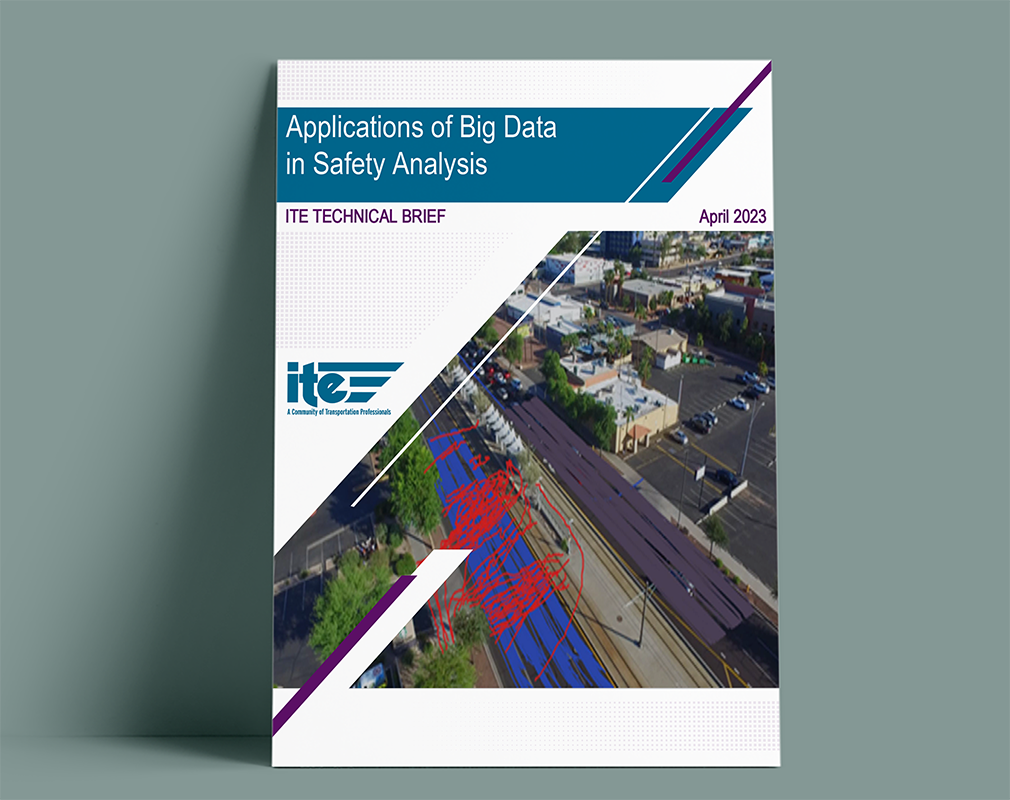
Big Data allows experts to look beyond traditional crash data. Traditional methods are useful in identifying high crash frequency locations; however, the downside is that they are reactive meaning a crash must occur for the data to be collected. Instead, Big Data is allowing practitioners to study a larger number of potential traffic incidents and trouble spots by evaluating specific contributing factors (i.e., driver behavior) to find out what might cause accidents before they happen. As technology improves and the industry shifts towards the use of even more advanced tools like real-time sensors and automated data collection systems, (i.e., Smart Cities), agencies will be able to proactively explore options for using Big Data as they upgrade and expand their existing systems.
To learn more about applying the right data sets to your safety projects, access the brief here. Be sure to tune in to the upcoming ITE webinar featuring ITE Brief co-author, Diwu Zhou, on May 23, 2023.
Contributors

Diwu Zhou
Senior Transportation Engineer
PE, RSP1

Meghan Mitman
RSP2I
Explore More

2021 Staff Promotions
As part of the Fehr & Peers culture of empowerment, we congratulate over 130 team members on earning promotions and feature 44 individuals achieving step-level promotions effective July 1.

Safer Today, Stronger Tomorrow
What happens when the safety goals for now and the goals for the future are in conflict? A people-focused Safe System approach considers vulnerabilities today and in the future. Recently adopted as a priority by agencies such as FHWA, Caltrans, the City of Philadelphia, and the Washington State Department of Transportation, safe system is a traffic safety framework emphasizing shared responsibility and a proactive approach where death and serious injury are recognized as unacceptable costs of travel on our roads.

2020 Staff Certifications
With 2020 drawing to a close, we recognize our team’s professional industry achievements amidst the year’s uniquely challenging circumstances.