

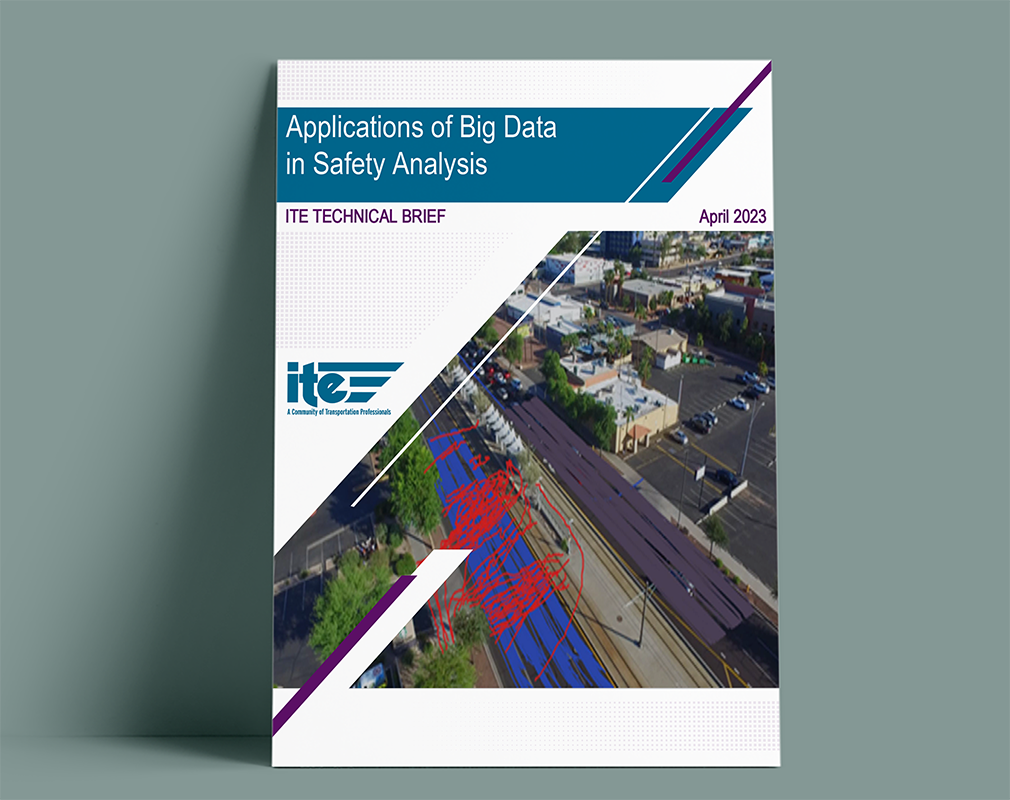
Big Data allows experts to look beyond traditional crash data. Traditional methods are useful in identifying high crash frequency locations; however, the downside is that they are reactive meaning a crash must occur for the data to be collected. Instead, Big Data is allowing practitioners to study a larger number of potential traffic incidents and trouble spots by evaluating specific contributing factors (i.e., driver behavior) to find out what might cause accidents before they happen. As technology improves and the industry shifts towards the use of even more advanced tools like real-time sensors and automated data collection systems, (i.e., Smart Cities), agencies will be able to proactively explore options for using Big Data as they upgrade and expand their existing systems.
To learn more about applying the right data sets to your safety projects, access the brief here. Be sure to tune in to the upcoming ITE webinar featuring ITE Brief co-author, Diwu Zhou, on May 23, 2023.
Contributors

Diwu Zhou
Senior Transportation Engineer
PE, RSP1

Meghan Mitman
RSP2I
Explore More

Travel Access as a Key to Equitable Planning
Analyzing travel accessibility measures how well current transportation networks connect us to destinations and exposes potential modal or equity limitations that may be causing difficulties for some users or geographic areas. Learn more and explore our travel access video.
Model Assessment Criteria for CEQA
Agencies should evaluate their models to ensure they provide reliable forecasts and meet CEQA standards for environmental impact analyses.
VMT Agency Decision Matrix
This guide helps agencies choose the right methods and tools to measure Vehicle Miles Traveled (VMT) for land use and transportation projects, supporting compliance with California’s SB 743.