

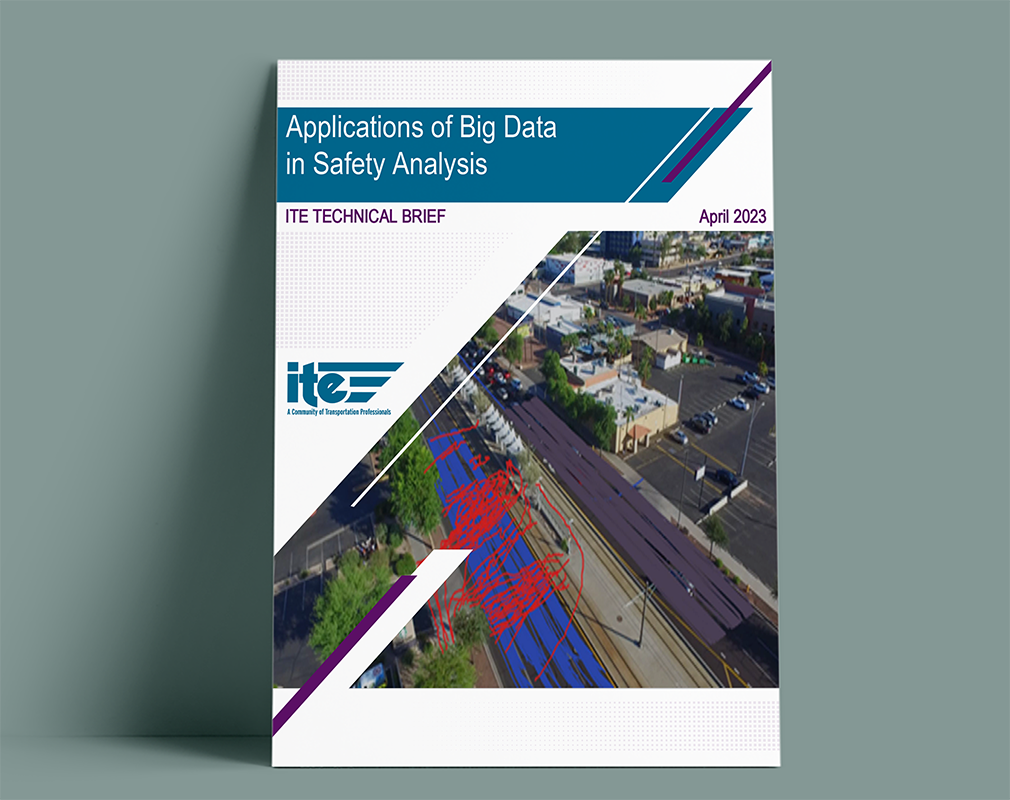
Big Data allows experts to look beyond traditional crash data. Traditional methods are useful in identifying high crash frequency locations; however, the downside is that they are reactive meaning a crash must occur for the data to be collected. Instead, Big Data is allowing practitioners to study a larger number of potential traffic incidents and trouble spots by evaluating specific contributing factors (i.e., driver behavior) to find out what might cause accidents before they happen. As technology improves and the industry shifts towards the use of even more advanced tools like real-time sensors and automated data collection systems, (i.e., Smart Cities), agencies will be able to proactively explore options for using Big Data as they upgrade and expand their existing systems.
To learn more about applying the right data sets to your safety projects, access the brief here. Be sure to tune in to the upcoming ITE webinar featuring ITE Brief co-author, Diwu Zhou, on May 23, 2023.
Contributors

Diwu Zhou
Senior Transportation Engineer
PE, RSP1

Meghan Mitman
RSP2I
Explore More

Kristof Devastey Joins Fehr & Peers
Warmly welcoming, Kristof Devastey, a safety and modal equity expert, to our Orlando Office. He brings years of experience in creating safer, equitable, and livable transportation solutions.

Prioritizing Safety to Protect Our Most Vulnerable
Discover how Arlington County is actively working towards a fair and inclusive transportation network, taking concrete measures to address the unequal impact of traffic crashes on vulnerable communities.

Collaborating for Safer Solutions
Discover the power of collaboration as we engaged with data partners to serve a new market and support the City of El Paso in enhancing roadway safety.