
Celebrating Innovations from Our R&D Teams
Celebrating Innovations from Our R&D Teams
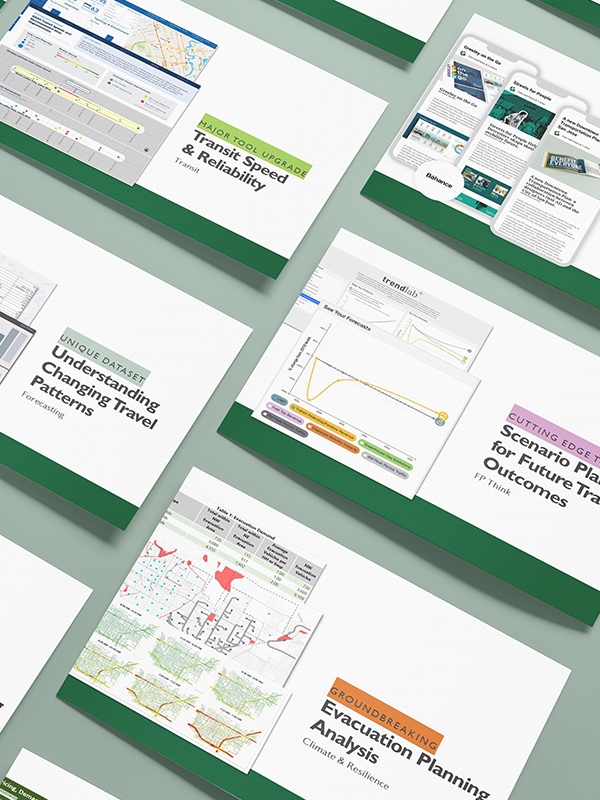
We are uniquely positioned to invest in cutting-edge research and development (R&D) and our engineers and planners are rapidly addressing the changing needs of our clients. Currently, we have 15 cross-disciplinary R&D teams. Their important efforts are routinely celebrated internally, spotlighting the talented minds behind them.
Here we’re sharing six 30-second examples to give you a flavor of what’s going on and what we’re seeing across the firm. If you’re interested, connect with our contributors for deeper insights.
Transit Speed & Reliability
Email Jeremiah LaRose to Learn More
Email John Gard to Learn More
Email Cullen McCormick to Learn More
Email Yoyo Zeng to Learn More
Email Chelsea Richer to Learn More
Email Matt Haynes to Learn More
Looking for more insights?
share this article
Contributors

Jeremiah LaRose
Transit Discipline Leader
Email Me

John Gard
Parking, Land Use and Transportation Leader
Email Me

Cullen McCormick
Creative Studio Leader
Email Me

Yoyo Zeng
Senior Planning and Forecasting Discipline Member
Email Me

Chelsea Richer
Climate & Resilience Discipline Leader
Email Me

Matt Haynes
FP Think Innovative Leader
Email Me
Explore More
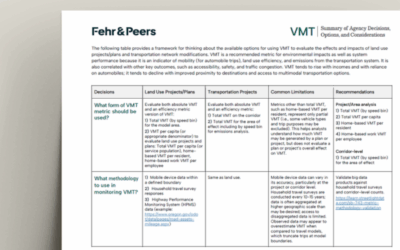
VMT Agency Decision Matrix
This guide helps agencies choose the right methods and tools to measure Vehicle Miles Traveled (VMT) for land use and transportation projects, supporting compliance with California’s SB 743.
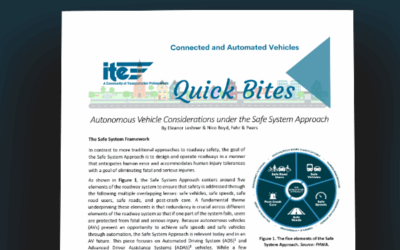
Street Safety in an Autonomous Vehicle Future
Autonomous vehicles may have the potential to support core elements of the Safe System approach, which strives to eliminate fatal and serious transportation injuries. Fehr & Peers partnered with ITE to publish “Autonomous Vehicle Considerations under a Safe System Framework,” which explores potential AV benefits, risks, and considerations within the Safe System framework.
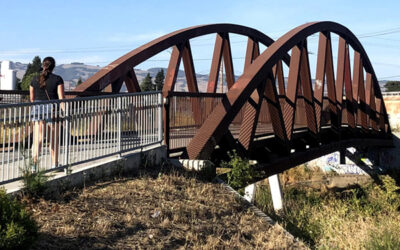
New Office in Sonoma County
Fehr & Peers is proud to announce the opening of our Petaluma office space! As we continue in our dedication to providing innovative transportation solutions that improve communities, our Petaluma location will allow us to better support our existing and future clients throughout Sonoma, Napa, Marin, Mendocino and Lake Counties.