
Celebrating Innovations from Our R&D Teams
Celebrating Innovations from Our R&D Teams
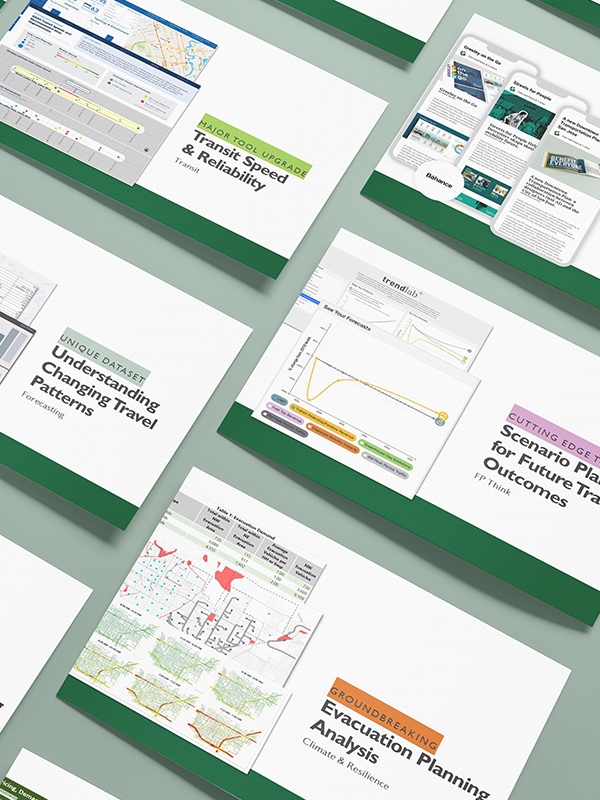
We are uniquely positioned to invest in cutting-edge research and development (R&D) and our engineers and planners are rapidly addressing the changing needs of our clients. Currently, we have 15 cross-disciplinary R&D teams. Their important efforts are routinely celebrated internally, spotlighting the talented minds behind them.
Here we’re sharing six 30-second examples to give you a flavor of what’s going on and what we’re seeing across the firm. If you’re interested, connect with our contributors for deeper insights.
Transit Speed & Reliability
Email Jeremiah LaRose to Learn More
Email John Gard to Learn More
Email Cullen McCormick to Learn More
Email Yoyo Zeng to Learn More
Email Chelsea Richer to Learn More
Email Matt Haynes to Learn More
Looking for more insights?
share this article
Contributors

Jeremiah LaRose
Transit Discipline Leader
Email Me

John Gard
Parking, Land Use and Transportation Leader
Email Me

Cullen McCormick
Creative Studio Leader
Email Me

Yoyo Zeng
Senior Planning and Forecasting Discipline Member
Email Me

Chelsea Richer
Climate & Resilience Discipline Leader
Email Me

Matt Haynes
FP Think Innovative Leader
Email Me
Explore More

2026 Staff Promotions
Join us in congratulating the 167 team members who earned promotions for their outstanding contributions this year.

Driving Less Starts with Building Differently
How much can planning decisions actually reduce driving? Our latest research introduces a statistical model that links built environment choices—such as density, transit service, walkability, and land use mix—to vehicle miles traveled (VMT). The findings give planners and policymakers practical, evidence-based tools to evaluate scenarios, understand tradeoffs, and make more informed transportation and land use decisions.
Navigating VMT Under CEQA
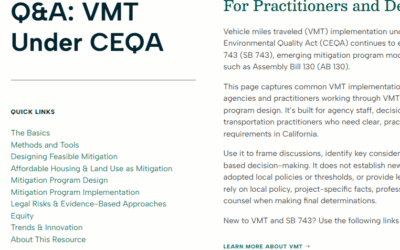
VMT under CEQA continues to evolve as agencies, practitioners, and decision makers work through analysis methods, mitigation feasibility, and defensible evidence. Our new Q&A resource offers practical answers on vehicle miles traveled, SB 743, mitigation program design, implementation, administration, and legal and strategic considerations.