
VMTIndex
A Tool to Find Your VMT
Transportation professionals are often required to estimate increases or decreases in driving to help describe the consequences of land use and transportation network decisions. Understanding the amount of vehicle miles traveled, or VMT, generated by a community provides a clearer picture of how integrated their transportation network is with existing land uses and offers insight to the experience of all people traveling.
Many states are beginning to estimate changes in VMT associated with land use and transportation projects as part of a project’s evaluation.
Experience VMTIndex

Quickly compare different types of VMT.
This dashboard allows you to compare two types of VMT for each Block Group to the local, regional, and statewide VMT averages. For more advanced analysis, select, filter, and compare VMT across cities, counties, unincorporated areas, MPOs, and the state.
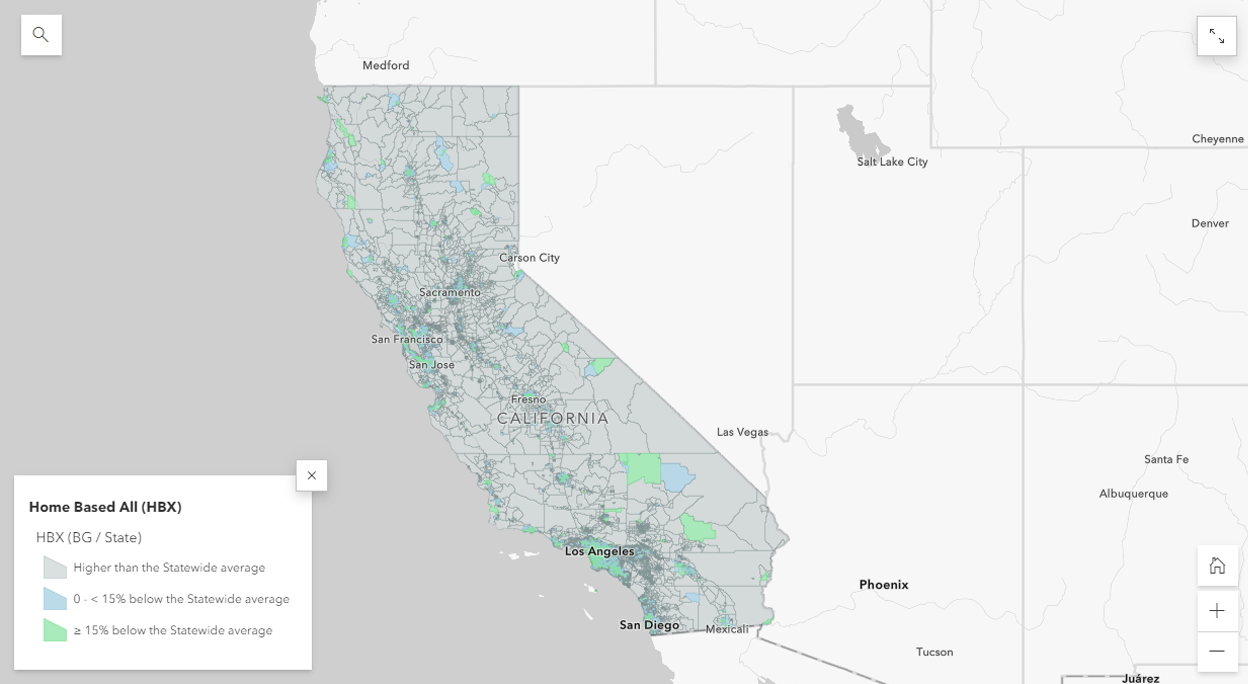
How many vehicle-miles are driven per person living in the Census Block Group to and from their homes each day? This estimate considers all types of trips, and the statewide average is 21 vehicle-miles per person.
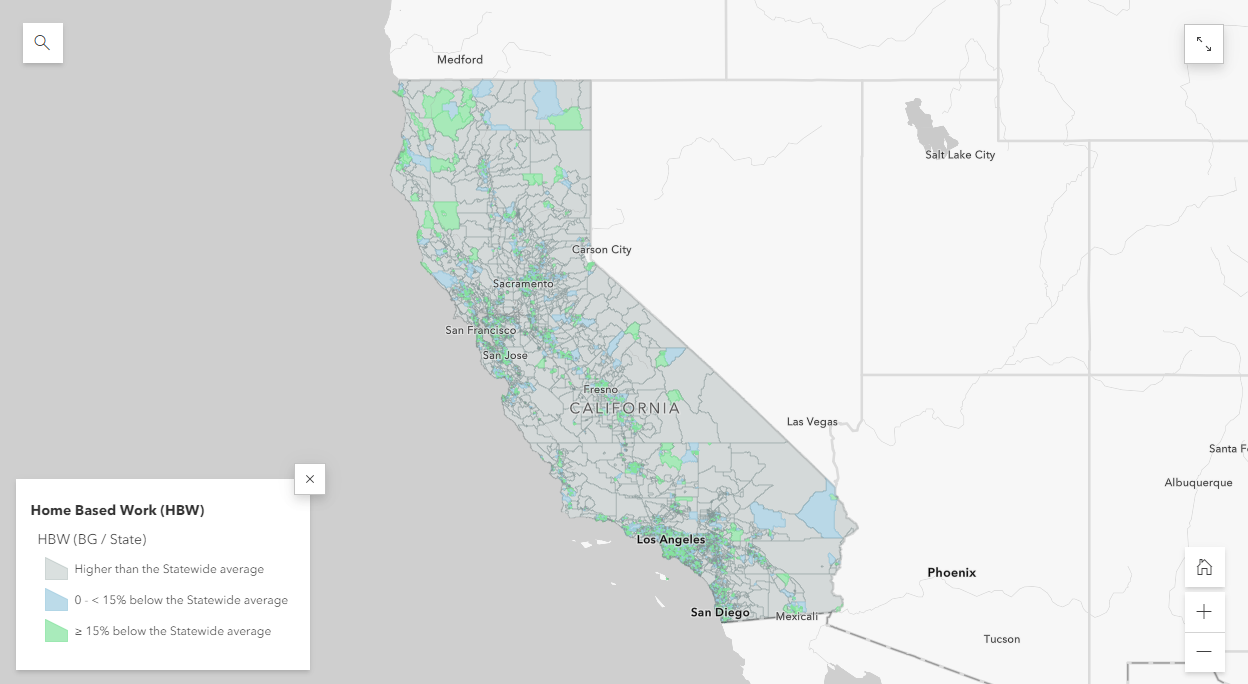
Home-Based Work VMT Per Worker
How many vehicle-miles are driven to and from work each day per person working in the Census Block Group? This estimate considers only trips to and from work, and the statewide average is 15 vehicle-miles per person.
Quickly compare different types of VMT.
This dashboard allows you to compare two types of VMT for each Block Group to the local, regional, and statewide VMT averages. For more advanced analysis, select, filter, and compare VMT across cities, counties, unincorporated areas, MPOs, and the state.
Home-Based VMT Per Resident
How many vehicle-miles are driven per person living in the Census Block Group to and from their homes each day? This estimate considers all types of trips, and the statewide average is 21 vehicle-miles per person.
Home-Based Work VMT Per Worker
How many vehicle-miles are driven to and from work each day per person working in the Census Block Group? This estimate considers only trips to and from work, and the statewide average is 15 vehicle-miles per person.
Other Applications for VMTIndex

CEQA & VMT Analysis

Grant & Funding Applications

Land Use Assessments

Walk Score Validation

Greenhouse Gas Analysis
About the Data
We derived VMT estimates for VMTIndex from a custom application of StreetLight Data. For areas outside California, we used sample trip estimates from February 1 to April 30, 2022. Within California, the sample trip estimates are from March to April 2022.
While we hope these VMT estimates simplify and enhance your planning process, we make no warranty regarding the data’s accuracy, quality, or appropriate use. This data set is intended to complement other VMT data sources, such as regional or local travel demand models. Since the VMT estimates are new and have not been fully validated or peer reviewed, the data is offered as-is and should be thoroughly reviewed for reasonableness in any applications. We welcome all suggestions for improving the data or tool.
Let’s Connect
Have questions? We’re here to help.

Mike Wallace
Forecasting Practice Leader


Patrick McDonough


VMTIndex is a Fehr & Peers Research & Development project. Data provided by StreetLight Data.
