
MXD Trip Generation Model
A Tool for Estimating Travel Demand from Mixed-Use Developments
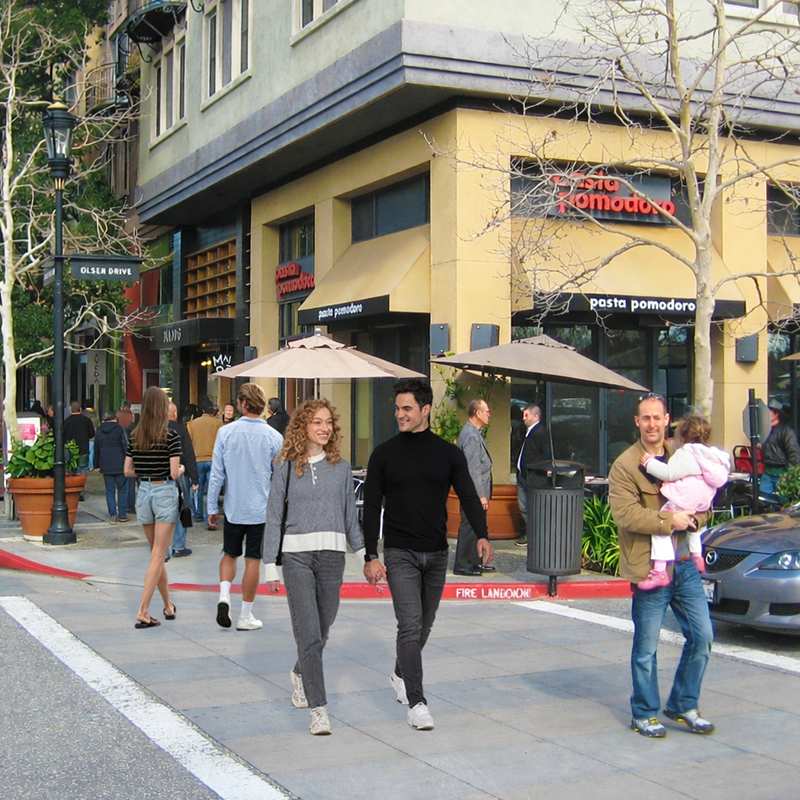
Traditional trip generation methods often overestimate traffic from mixed-use development. Standard Institute of Transportation Engineers (ITE) trip generation rates treat each land use independently and assume most trips arrive by car (when applied without adjustment for mixed-use context). In reality, mixed-use places function differently: people walk between uses, combine trips, or arrive by transit or bike.
Built on Research and Practice
2010 EPA Partnership
Continued Advancement
Latest Update
The newest version incorporates trip generation rates from the ITE Trip Generation Manual, 12th Edition (2025).
More Accurate Trip Generation
MXD builds on conventional ITE trip generation methods to estimate trips for mixed-use development, accounting for internal trips between complementary land uses and how the surrounding environment influences travel by walking, biking, transit, and driving. By incorporating built environment variables, often referred to in transportation planning as the “D’s” (such as density, diversity of land uses, and design/connectivity), MXD captures how land use mix and site context shape travel behavior.
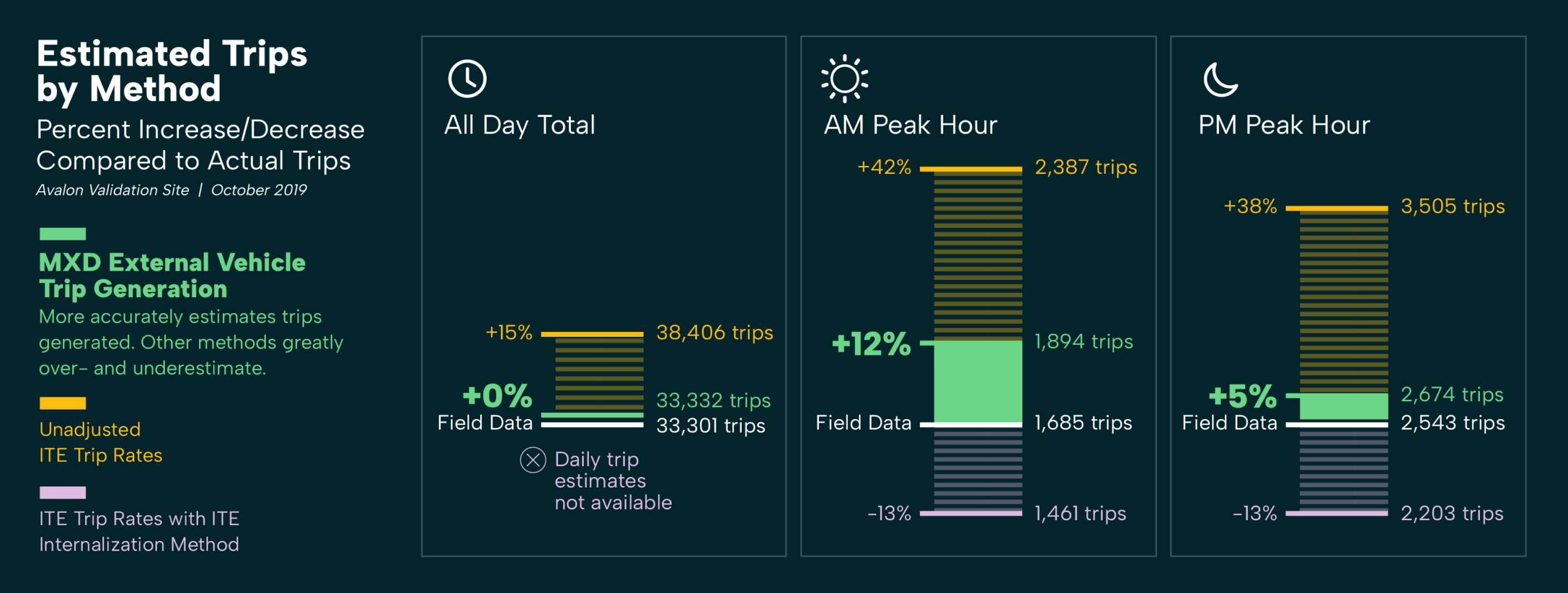
Real-World Data, Validated.
Customizable for Communities
Because travel behavior varies by region, we can develop locally calibrated versions of the MXD tool tailored to a community’s development patterns and transportation goals.
This allows agencies to evaluate mixed-use development using methods that better reflect local travel behavior and planning goals.
Customizable for Communities
Because travel behavior varies by region, we can develop locally calibrated versions of the MXD tool tailored to a community’s development patterns and transportation goals.
This allows agencies to evaluate mixed-use development using methods that better reflect local travel behavior and planning goals.

Applied in Practice
Washington, DC
Customized MXD model for DDOT
User guide for agency staff
Supporting literature review
What’s Next
In 2025, we conducted one of the largest mixed-use traffic data collection efforts to date, studying 37 mixed-use sites across the US. Findings from this dataset will be released in 2026 and will provide new insights into post-COVID travel behavior, further refining MXD calibration.

